the simple answer
buying a prebuilt gaming PC is now cheaper than building one yourself. you’ll save around 10-25% if you go prebuilt. this is shocking because for years everyone said building was cheaper. what changed? RAM prices went crazy. manufacturers bought their supplies before prices exploded. you cannot get the same deals they get. so prebuilt wins the budget battle in 2026.
why prebuilt suddenly became cheaper
here’s what happened. late in 2025, DDR5 memory became hard to find. prices started climbing. big manufacturers like ASUS and CyberPower had already ordered their RAM months earlier. they locked in good prices. when shortages hit, they kept their prices stable. your local retailer? they had to pay way more for RAM. so when you buy components separately, you pay the inflated prices. manufacturers absorb the cost difference. they would rather sell systems cheaper than lose sales. you end up paying a premium when building yourself.
real prices you’ll see in 2026
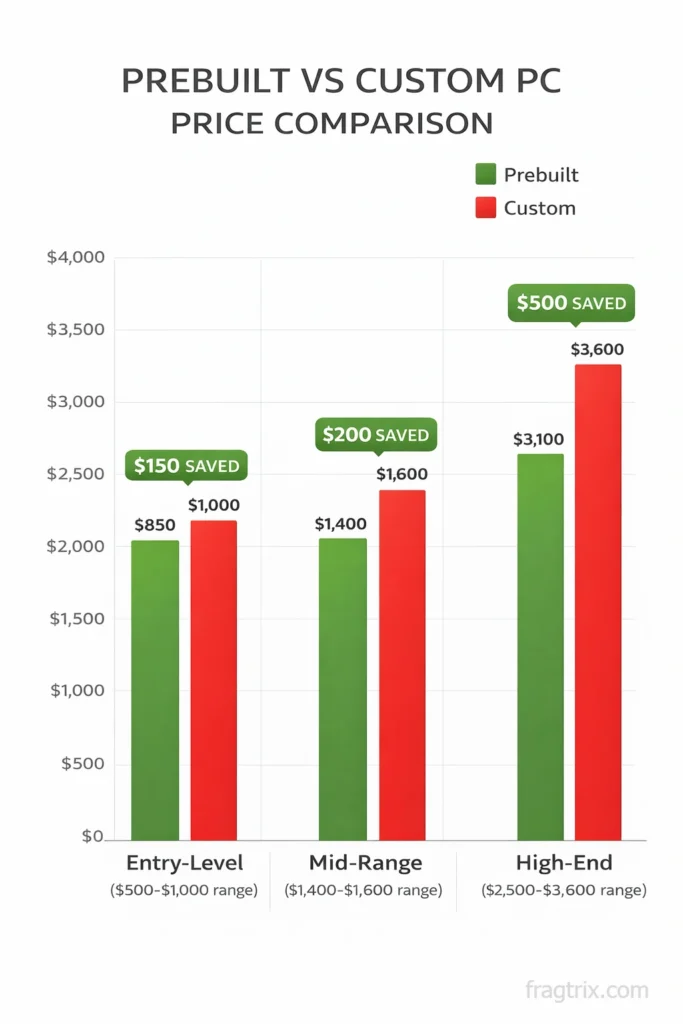
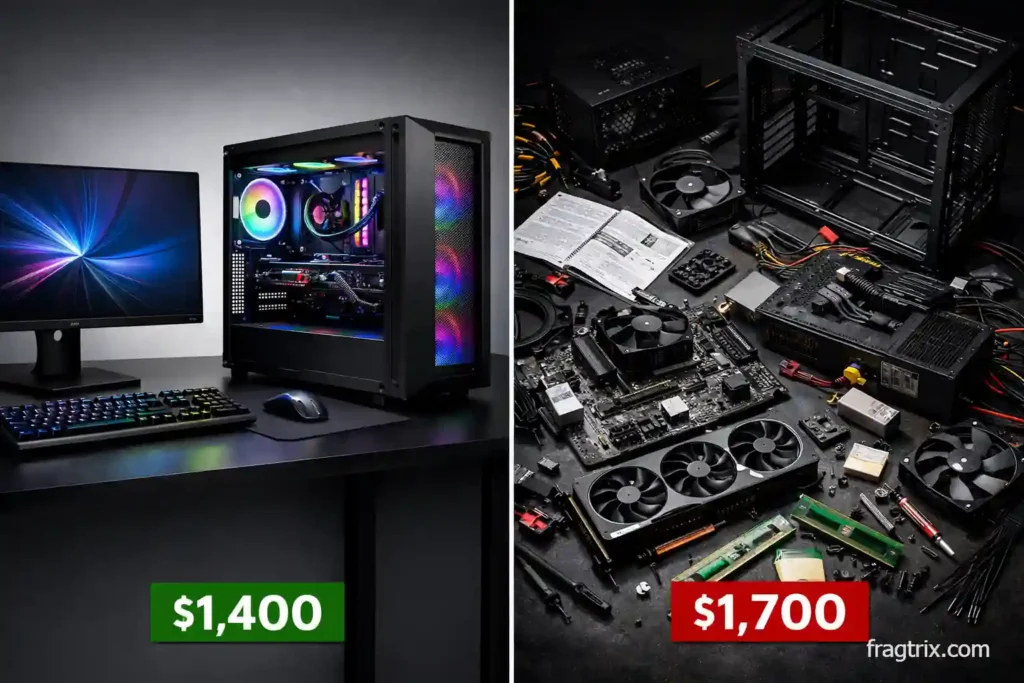
want a basic 1080p gaming PC? prebuilt costs $850-$999. building it yourself? expect $950-$1,200. that’s $100-$200 extra out of your pocket. step up to 1440p gaming with a good GPU. prebuilt around $1,400-$1,600. custom build? $1,600-$2,000. the gap grows larger. that’s because high-end RAM is the expensive part. going all-out for 4K gaming? prebuilt $2,500-$3,300. custom $2,700-$3,600. prebuilt still wins, but the difference shrinks at this price level.
what makes prebuilt cheaper
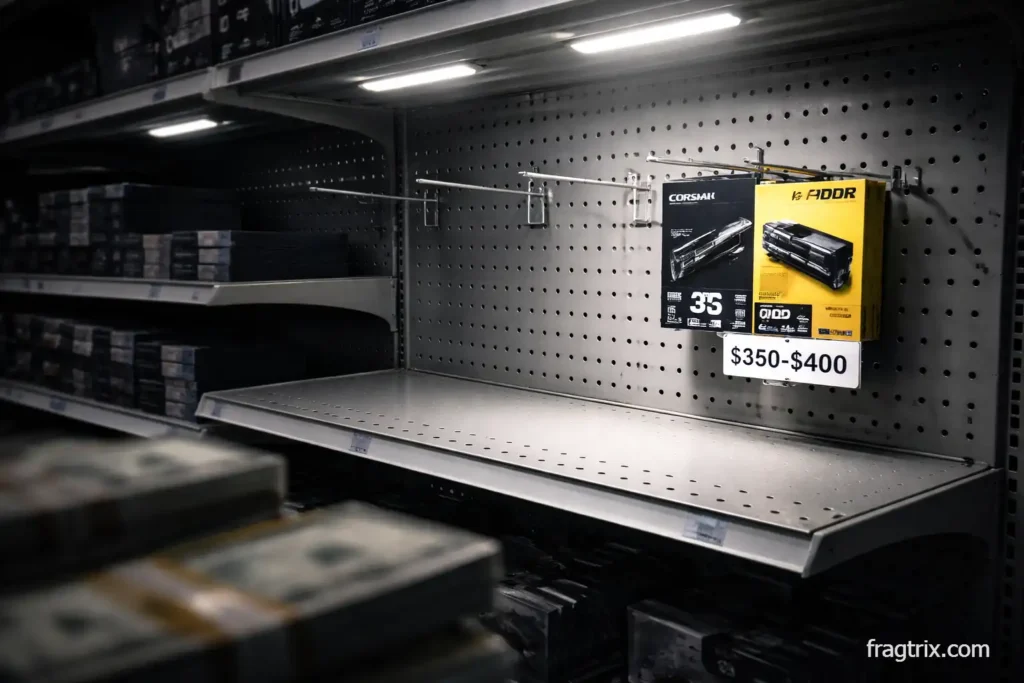
it’s all about RAM. a 32GB DDR5 kit costs $300-$400 right now. that’s 15-25% of your total budget. manufacturers bought these kits months ago for much less. you’re buying them today at today’s prices. add in smaller bulk discounts on other parts. manufacturers buy thousands of units. you buy one. retailers give them volume discounts. they don’t give you anything special. manufacturers also spread their costs over many systems. they don’t need huge profit margins. retailers do. that’s why they mark things up higher.
prebuilt systems: the good stuff
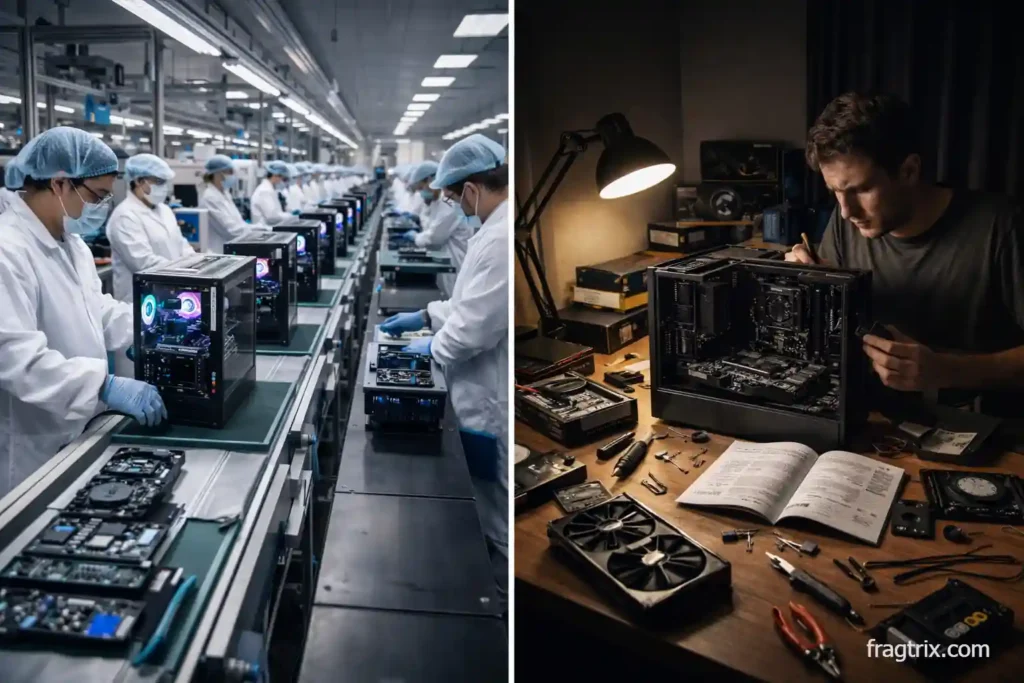
you open the box and start gaming. everything works. no research needed. no assembly stress. if something breaks, you call one company. one warranty covers everything. delivery is fast, usually within days. you don’t have to worry about compatibility. professionals assembled it with cable management done right. thermal performance is tested before shipping. this matters if you’re not tech-savvy.
prebuilt systems: the annoying stuff
you get limited color options and configurations. some manufacturers use weird brands for the power supply. upgrades later can be tricky with some prebuilt systems. RAM might be slower DDR5 4800 instead of the better 6000. you might get extra software you don’t want. cooling solutions are often basic. the motherboard might not have fancy features for future upgrades. you’re paying for assembly and marketing even if you don’t care about those things.
custom builds: the good stuff
you pick every single part. you want premium cooling? you get it. want the fastest RAM? buy it. RGB colors exactly how you like them? done. you learn how your PC actually works. repairs and upgrades later are simple because you know what you have. all parts come from separate manufacturers, so warranty coverage is straightforward. if you reuse old parts, you save money immediately. you feel proud after you build it.
custom builds: the annoying stuff
you need to spend hours researching compatible parts. assembly takes time if you haven’t done it before. you could accidentally break expensive components. if parts arrive broken, you have to deal with separate returns. if something goes wrong after assembly, troubleshooting is your job. you might need to buy extra tools or thermal paste. shopping for parts takes patience as stock changes daily. shipping costs add up when buying from different sellers. you don’t get the bulk discounts that manufacturers get. customer support means doing it yourself mostly.
what to actually check if buying prebuilt
don’t just look at the CPU and GPU. check the RAM speed. some systems come with slower 4800 MHz when 6000 MHz is better. see if it supports XMP. look at the power supply. is it from a trusted brand? does it have Gold certification? check the motherboard. does it have PCIe 5.0? will you be able to add more parts later? what’s the cooling like? is it just a basic fan or something better? how long is the warranty? what exactly does it cover? can you easily upgrade RAM and storage later? these details matter more than you think.
when building custom makes sense
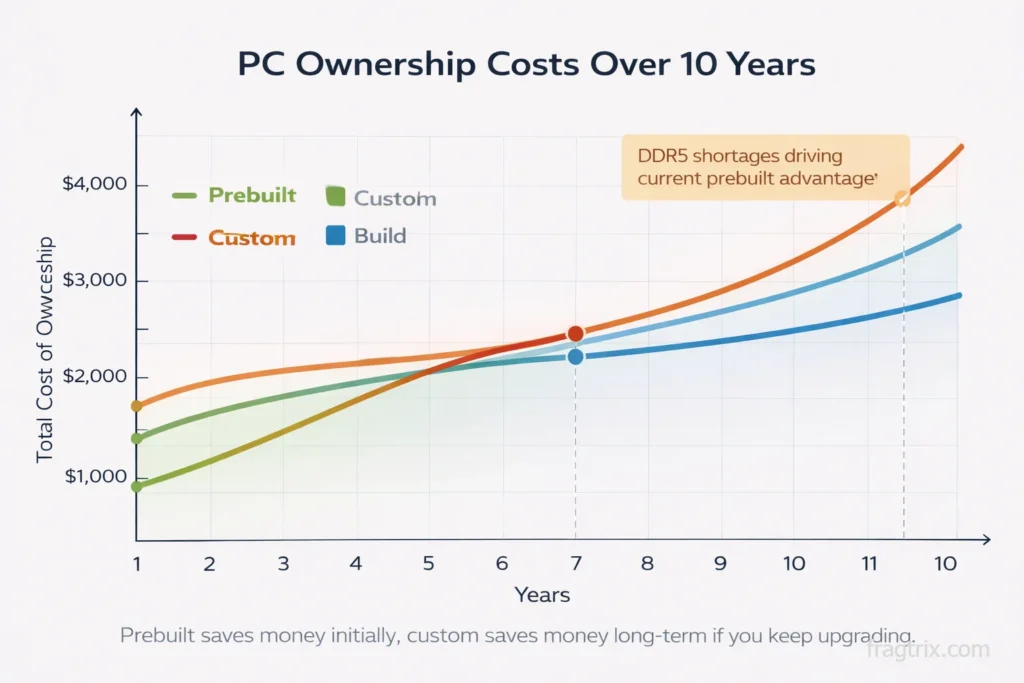
you have specific needs that prebuilt systems don’t offer. you want a super compact case or extreme water cooling. you plan to upgrade every year for the next 5 years. you already own some good parts you can reuse. you spend time watching PC part deals on forums. you’re comfortable fixing things that break. you want to optimize for streaming or video rendering specifically. you need absolute control over every component. you plan to own this PC for 10+ years and upgrade parts as you go. you don’t mind researching for weeks before buying.
honest comparison

| what matters | prebuilt in 2026 | custom in 2026 |
|---|---|---|
| price | cheaper by 10-25% | 10-25% more expensive |
| ready to use | same day usually | needs several hours |
| support | call them, they help | you figure it out |
| customization | limited options | total freedom |
| upgrades later | sometimes tricky | always easy |
| quality of parts | sometimes basic | you choose |
| warranty | one company handles it | contact each maker |
| best for | most people | tech enthusiasts |
the DDR5 RAM problem
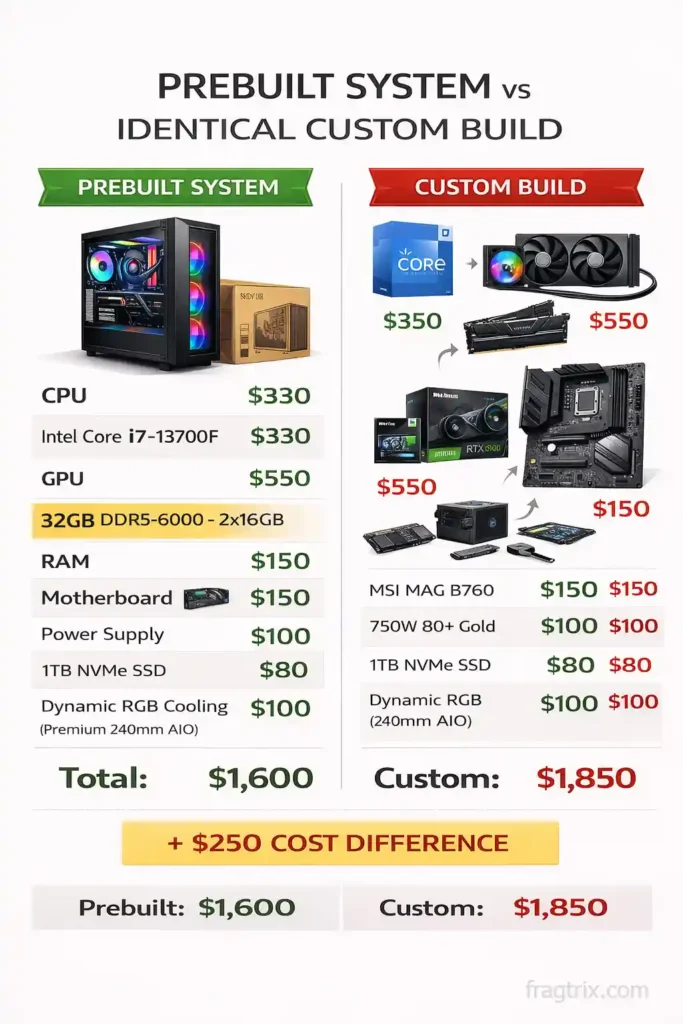
RAM is why prebuilt wins right now. DDR5 kits doubled in price last year. manufacturers locked in supplies before this happened. they’re not trying to maximize profits. they just want to move systems. so they eat the cost difference. you can’t do that as an individual buyer. retailers want higher profits, so they mark things up more. simple as that. this situation should improve eventually, but probably not until mid-2027 when more RAM comes online.
who should buy prebuilt
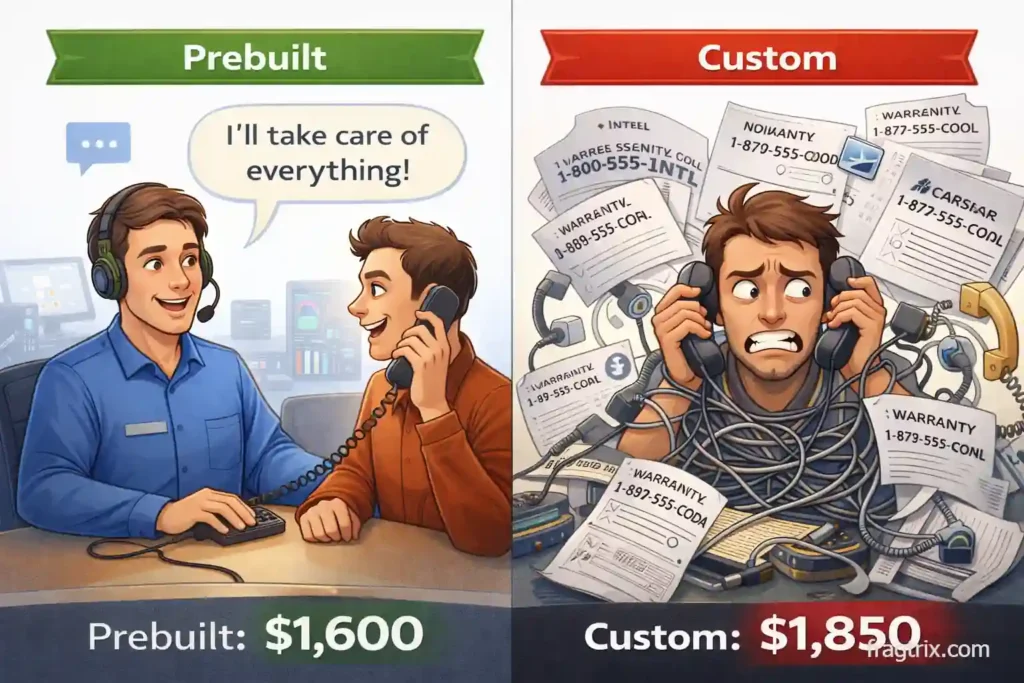
you want to spend less money. that’s the biggest reason. you’re not technical and don’t want to learn. you want everything handled in one warranty. you want to start gaming this week, not next month. you don’t care about RGB colors or fancy cooling. you just want a working system that runs games.
who should build custom
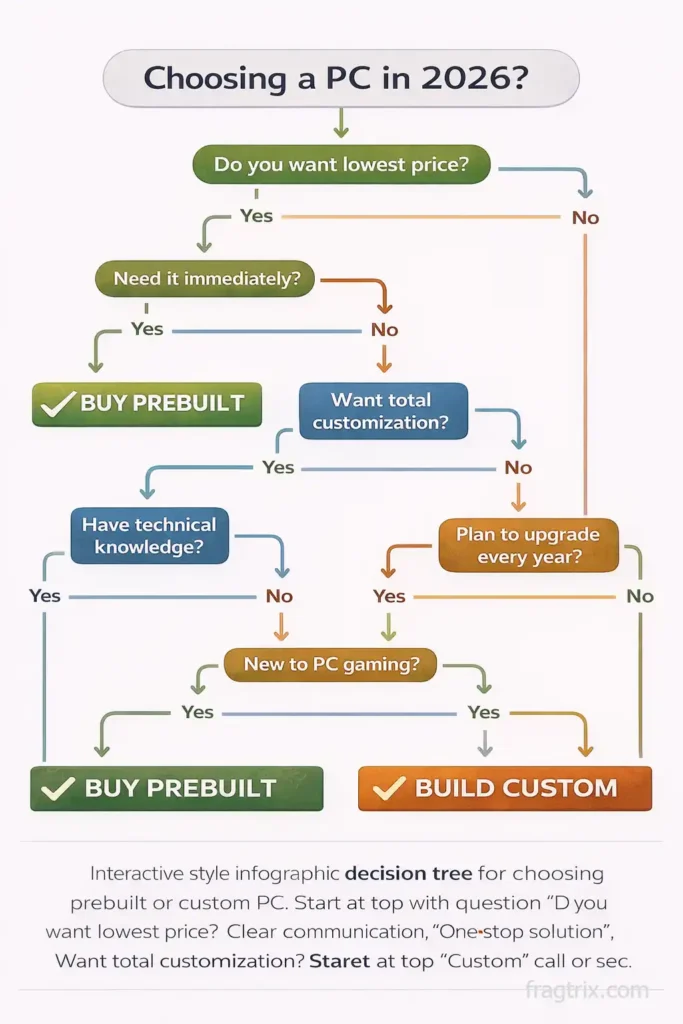
you want a specific setup that prebuilts don’t offer. you have technical knowledge already. you enjoy the building process. you plan to upgrade parts every year or two. you’ll own it for 7+ years and keep upgrading it. you monitor price deals obsessively. you need extreme customization for streaming or rendering. you want the absolute best components even if they cost more. you don’t mind spending weeks researching and building.
the verdict for 2026
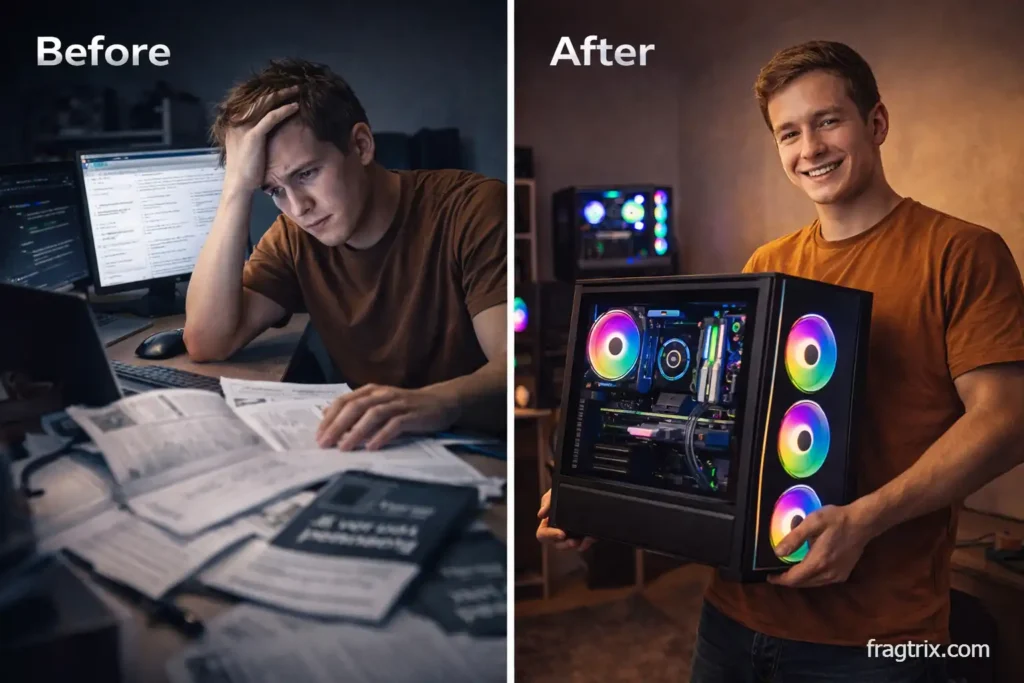
for most people, buy prebuilt. you’ll save money. you’ll get support. you’ll be gaming faster. unless you have specific technical needs or enjoy the building process, prebuilt makes more sense than ever before. the market changed because of RAM shortages. manufacturers have supply chain advantages that individuals simply cannot match. that’s the reality of 2026. it might change later, but right now prebuilt is the smarter buy. check the RAM speed and motherboard features before ordering. avoid systems with weird proprietary parts. read the warranty details. but yes, prebuilt is your best bet for value.