
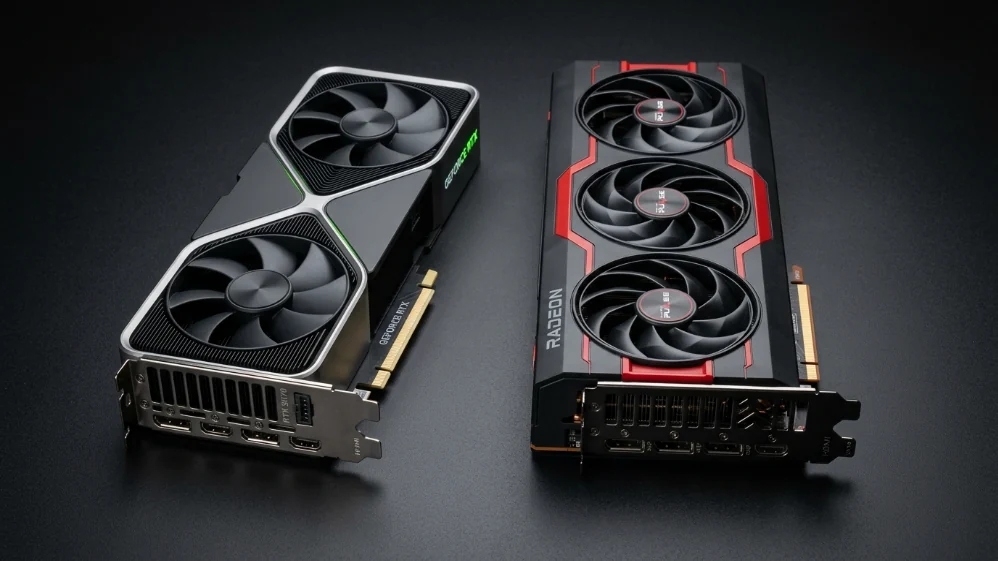
Two cards, same price bracket, completely different approaches, that’s the GPU market right now, and honestly? It’s the most interesting mid-range battle we’ve had in years.
The RTX 5070 launched March 5, 2025 at $549 MSRP, the RX 9070 XT followed one day later at $599. Both target 1440p gaming, both sit in the sweet spot between “decent” and “overkill” and both have very real reasons to choose one over the other, this isn’t a clear-cut winner situation, it’s a decision that depends entirely on how you game.
Let’s break it down properly.
Specs: What you’re actually getting
Before getting into performance, the spec sheet tells a story worth reading, these two cards are built very differently under the hood.
| Spec | RTX 5070 | RX 9070 XT |
|---|---|---|
| Architecture | Blackwell (GB205) | RDNA 4 (Navi 48) |
| Shader Units | 6,144 CUDA cores | 4,096 stream processors |
| RT Cores | 48 (4th gen) | 64 RT accelerators |
| VRAM | 12 GB GDDR7 | 16 GB GDDR6 |
| Memory Bus | 192-bit | 256-bit |
| Bandwidth | 672 GB/s | 640 GB/s |
| TDP | 250W | 304W |
| Process Node | TSMC 4N (5nm) | TSMC N4P (4nm) |
| MSRP | $549 | $599 |
| Launch Date | March 5, 2025 | March 6, 2025 |
The RTX 5070 runs on faster GDDR7 memory and draws significantly less power, the RX 9070 XT hits back with 16 GB of VRAM, a wider 256-bit bus, and AMD’s newer 4nm process node, the NVIDIA card uses more shader cores on paper, but raw shader count rarely tells the whole story in gaming workloads.
One thing worth flagging early: current market prices are above MSRP for both cards, as of May 2026, the RTX 5070 is running around $615–635 on Amazon. Shop around before assuming you’re getting launch pricing.
1440p Gaming: The real battleground
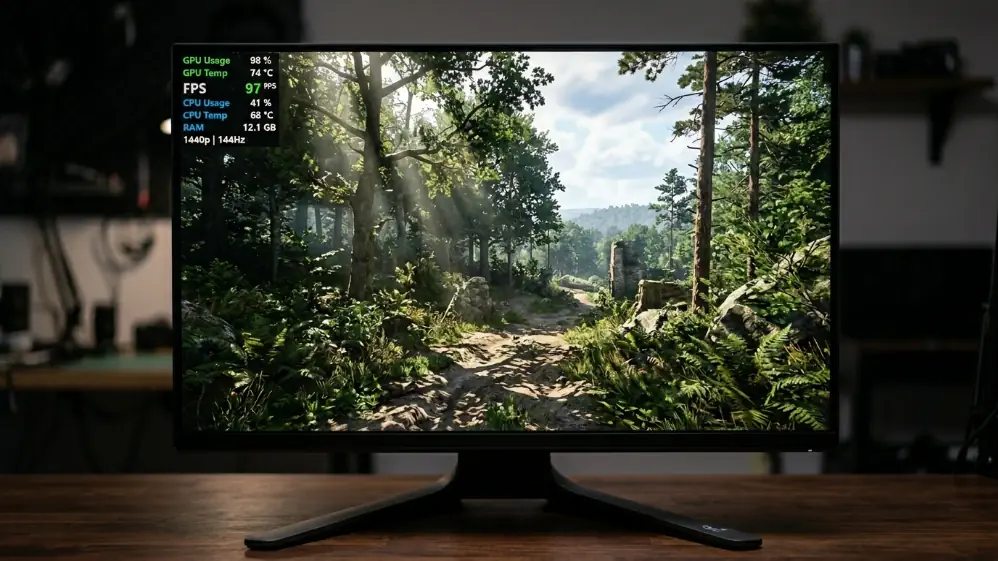
At 1440p, the RX 9070 XT is generally faster than the RTX 5070 in rasterized games consistently, not occasionally, the lead ranges from 7% to 17% across most tested titles, according to Tom’s Hardware’s head-to-head testing, that’s a real difference you can feel in the demanding AAA titles where it matters most.
Some specific examples from verified benchmarks: Final Fantasy XVI runs 16% faster on the AMD card, and Microsoft Flight Simulator 2024 is 31% quicker. On the other side, Warhammer 40,000: Space Marine 2 swings hard in NVIDIA’s favor by 28%, though that gap is partly attributed to early AMD driver optimization issues rather than a pure architectural difference, drivers improve so this particular data point deserves some context.
The bottom line for 1440p rasterization: if you play mostly AAA single-player titles and want raw frames, the RX 9070 XT gives you more headroom, it’s not a marginal win in most games it’s consistent across a wide game library.
At 1080p, both cards perform nearly identically, the gap is barely measurable, it opens up as you push to 1440p, and widens again at 4K where the RX 9070 XT leads by roughly 30% in native rasterized workloads. If 1440p high-refresh gaming is specifically your target, AMD has the raw numbers advantage at this tier.
Ray Tracing: NVIDIA still owns this
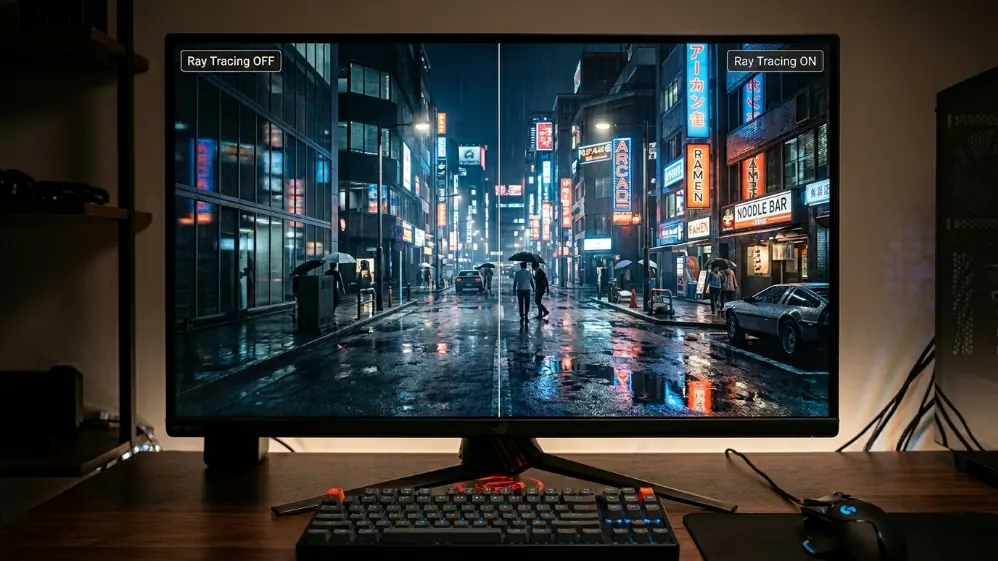
Ray tracing is where the story flips completely. The RTX 5070 is the clear winner here, and in some titles, it’s not even close.
AMD has made genuine, substantial progress with RDNA 4’s ray tracing architecture compared to previous generations that part is real and worth acknowledging, RDNA 4 cut the ray tracing deficit to NVIDIA significantly versus RDNA 3. But when path tracing enters the picture, the RTX 5070 can lead by 57% in titles like Black Myth: Wukong. GamersNexus put it plainly in their 9070 XT review: if you want to play Black Myth with ray tracing enabled, you basically buy NVIDIA.
For mixed RT workloads games with ray tracing enabled but not pushing full path tracing the gap is more manageable and in some titles relatively close, but NVIDIA’s 4th generation RT core advantage is architectural, not something a driver update can close, and it shows in the most demanding scenarios.
Upscaling: DLSS 4 vs FSR 4
This is where NVIDIA’s ecosystem becomes its biggest competitive advantage at this price tier.
DLSS 4 with Multi Frame Generation generates up to three additional AI frames per rendered frame, in supported games, this can dramatically boost perceived frame rates enough to partially compensate for the RTX 5070’s deficit in native rasterization performance. For a player who’s comfortable relying on upscaling tech, DLSS 4 changes the value equation significantly, NVIDIA officially claims support across 650+ games and applications.
FSR 4 is AMD’s answer, and it’s a meaningful step forward from FSR 3, the image quality gap with DLSS has narrowed, the honest caveat: FSR 4’s game support is still expanding, and DLSS 4 Multi Frame Generation currently has no direct AMD equivalent in terms of frame multiplication. In competitive esports titles running at high frame rates, neither card needs upscaling both clear 200+ FPS easily in games like Valorant and CS2 at 1440p. The upscaling debate becomes relevant in heavy AAA single-player titles.
VRAM and Longevity: Where 4GB makes a difference
The 16 GB versus 12 GB VRAM gap matters more in 2026 than it did at launch, and the trend is moving in one direction.
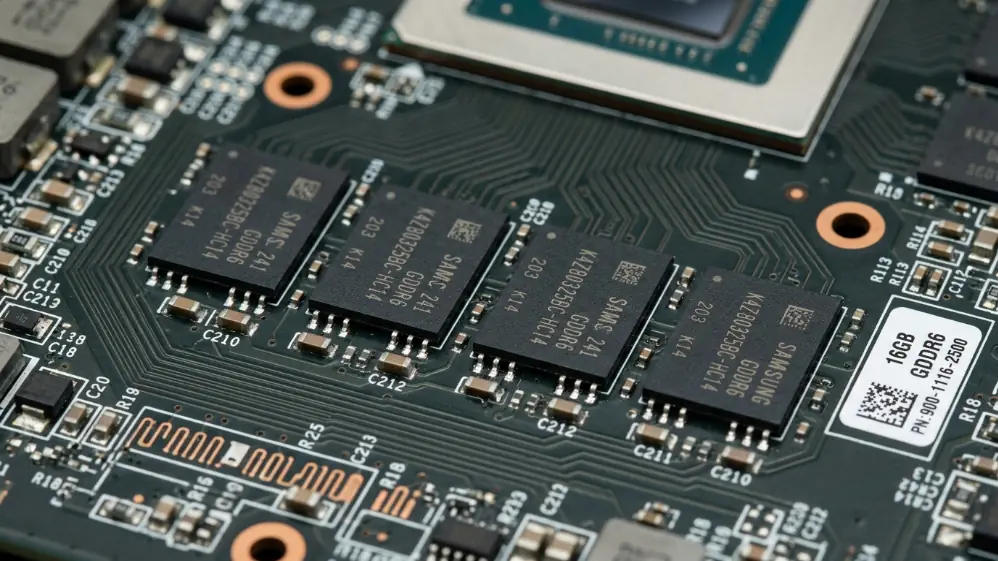
At 1440p today, both cards handle the current game library comfortably, the problem is what’s coming, VRAM pressure in modern AAA titles is increasing with every major release, and cards regularly bump against their limits at 4K or in heavily modded games. The RTX 5070’s 12 GB GDDR7 is faster per-gigabyte than the 9070 XT’s GDDR6, but when a game exceeds your buffer, speed doesn’t save you, capacity does.
TechPowerUp documented VRAM saturation on the RTX 5070 in Cyberpunk 2077 with ray tracing active at 4K, producing heavy stutters as the driver started swapping assets in and out of memory, the RX 9070 XT doesn’t hit that wall in the same scenario thanks to its larger buffer. If you’re planning to keep this card for three to four years, which is realistic at this price point, 16 GB is the more comfortable position as game engines continue pushing texture and asset budgets higher.
Power, efficiency and build considerations
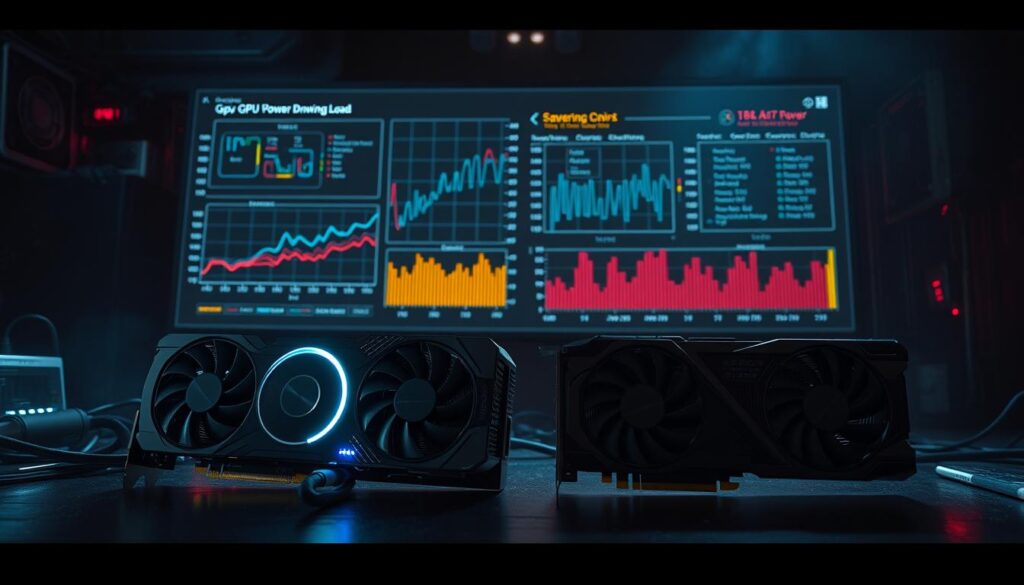
The RTX 5070’s 250W TDP versus the RX 9070 XT’s 304W is a 54-watt difference that has real-world implications beyond just your electricity bill.
| Consideration | RTX 5070 | RX 9070 XT |
|---|---|---|
| TDP | 250W | 304W |
| Efficiency advantage | ~21% better per frame | Higher sustained load |
| Recommended PSU | 650W | 750W |
| Compact build friendly | Yes | Less so |
| Noise level (general) | Lower | Higher |
| Streaming encoder | NVENC (excellent) | AMD encoder (good) |
In small form factor or mini-ITX builds where thermals are already a constraint, 54 fewer watts under sustained load matters. The RX 9070 XT runs hotter and generates more noise at load, not disqualifying, but relevant if your case or cooling solution is limited, for streamers, NVIDIA’s NVENC hardware encoder is still widely considered the stronger option for broadcast quality at 1440p, giving the RTX 5070 a real secondary advantage beyond gaming performance alone.
Who Should Buy Which?
Neither card is universally better, and anyone telling you otherwise is skipping context. The right pick depends entirely on what you play and how you play it.
| Your situation | Best pick |
|---|---|
| 1440p max settings, mostly AAA raster | RX 9070 XT |
| Heavy ray tracing or path tracing games | RTX 5070 |
| DLSS 4 ecosystem, streaming with NVENC | RTX 5070 |
| Want 16 GB VRAM for long-term use | RX 9070 XT |
| Compact or power-constrained build | RTX 5070 |
| Pure FPS per dollar at 1440p native | RX 9070 XT |
| 4K native rasterization | RX 9070 XT |
| 4K gaming with DLSS 4 Multi Frame Gen | RTX 5070 |
| Competitive esports at 240Hz+ | Either — both are more than enough |
Conclusion: Which one should you actually buy?
The RX 9070 XT is the stronger 1440p GPU on native rasterization performance. Tom’s Hardware, TechRadar, and TechPowerUp reach the same conclusion from their independent testing: at $599 MSRP, AMD delivers close to RTX 4080 gaming performance levels for roughly half that card’s original launch price. For pure frame output at 1440p and 4K, AMD wins this head-to-head clearly.
The RTX 5070 wins on power efficiency, ray tracing performance, DLSS 4 ecosystem access, and streaming via NVENC. These are real advantages that matter depending on your use case, not marketing bullet points. If you play a lot of RT-heavy single-player titles, stream regularly, or are building in a compact case, the NVIDIA card makes more sense even though it’s slower in raw rasterization.
The only real mistake here is overpaying above MSRP for either card. In May 2026, the RTX 5070 is sitting around $615–635 on Amazon, already above its $549 launch price. The RX 9070 XT has seen similar pressure, set price alerts, wait for restocks, and don’t pay scalper premiums for either, at MSRP, both represent solid value. At $800+, neither one justifies the premium.
Pick the card that fits how you actually game, both are good, Neither is a mistake at the right price.
Specs sourced from Nvidia.com and AMD official product pages. Performance data from Tom’s Hardware, GamersNexus, TechPowerUp, and TechRadar reviews, pricing data from Amazon US, May 2026.
Pingback: How to Set Up DLSS 4 and Frame Generation - Fragtrix
Pingback: Battlefield 6 Season 3: New Map, Weapons, Modes - Fragtrix
Pingback: An AI converts Nvidia code to AMD in 30 minutes - Fragtrix
Pingback: CES 2026: Nvidia Unveils DLSS 4.5, G-Sync Pulsar - Fragtrix
Pingback: Nvidia Restores PhysX Support for RTX 50 GPUs - Fragtrix