
The spec sheet looks insane, PCIe 5.0 SSDs hitting 14,900 MB/s read speeds versus 7,500 MB/s for PCIe 4.0. On paper that’s nearly double the throughput, on paper.
The problem is that gaming doesn’t run on paper, and in 2026, the honest answer to “should I upgrade to PCIe 5.0 for gaming?” is more nuanced than the marketing wants you to believe.
Here’s what the benchmarks actually say.
What the speed difference looks like
Raw specs first, this is what separates Gen4 from Gen5 on paper.
| Spec | PCIe 4.0 SSD | PCIe 5.0 SSD |
|---|---|---|
| Sequential Read (max) | ~7,000–7,500 MB/s | ~14,500–14,900 MB/s |
| Sequential Write (max) | ~6,900 MB/s | ~13,400–14,000 MB/s |
| Platform Support | AM4, AM5, LGA1700, LGA1851 | AM5 and LGA1851 only |
| Price (2TB, May 2026) | ~$80–120 | ~$125–160 |
| Thermal throttling risk | Minimal | Resolved in 2026 |
The sequential speed gap is real. PCIe 5.0 is genuinely close to twice as fast in raw throughput benchmarks, but sequential speed is one of the least gaming-relevant metrics you can measure, and that’s where the marketing stops telling you the truth.
What actually matters for gaming
FPS first: And storage has nothing to do with it
Across testing from SATA through PCIe 5.0 drives, FPS variance at 1440p and 4K is less than 1%, that’s not a rounding error, that’s effectively zero. SSDs affect load times and asset streaming, not frame rates. Your GPU and CPU determine your FPS, the storage interface doesn’t.
NZXT put it plainly: the graphics card, not the PCIe connection, is the limiting factor in today’s games, the PCIe 4.0 interface is already wide enough for everything current-gen GPUs need from storage, faster storage won’t push more frames out of your RTX 5070.
Load times: you’ll notice it once, then forget about it
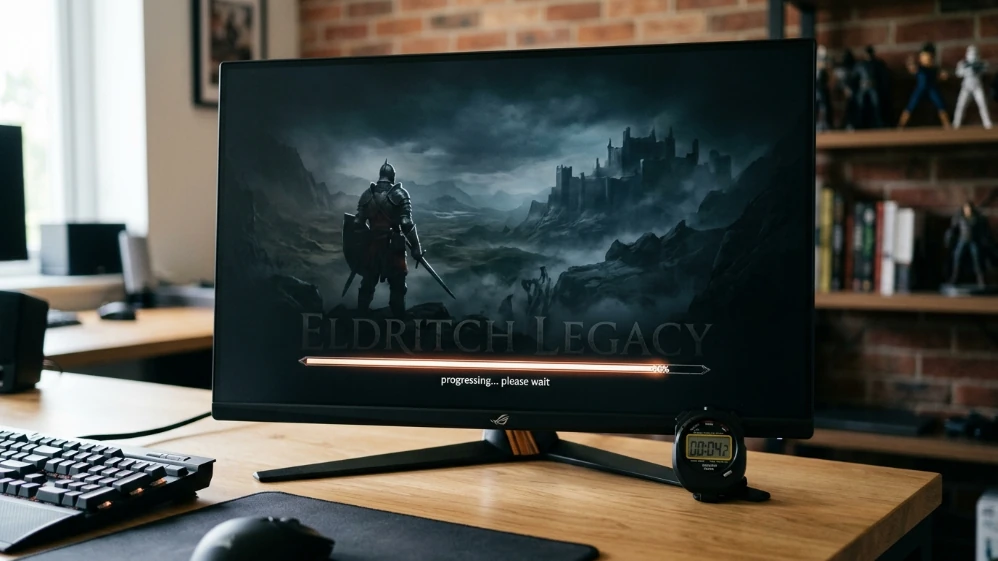
PCIe 5.0 does cut load times, the real-world gaming delta between Gen4 and Gen5 is roughly 1–3 seconds on load screens according to Tom’s Hardware synthetic testing, the 3DMark Storage Benchmark, which measures how quickly games load graphical assets, showed about a 9% improvement for PCIe 5.0 over Gen4 in gaming scenarios.
In Assassin’s Creed Mirage specifically, the difference between PCIe 4.0 and PCIe 5.0 was negligible, at 4K the FPS was identical, and at 1440p PCIe 4.0 actually measured fractionally higher (within 1.4%, well within margin of error); in Cyberpunk 2077, results were similarly close.
Shaving 1–3 seconds off load screens is real, it’s just not something you think about after the first week.
Direct storage: still waiting for its moment
DirectStorage was supposed to be the technology that finally made storage speed matter for gaming, in 2026, even with DirectStorage enabled, the gains from faster SSDs stay marginal, game developers haven’t adopted it at the scale needed to make Gen5 speeds meaningful in practice, and that’s not changing anytime soon.
The drives worth knowing about
PCIe 5.0: the gen5 market in 2026
Early Gen5 drives had a real thermal throttling problem sustained workloads caused them to overheat and slow down, largely solved now, newer controllers from Phison (E28), Silicon Motion, and InnoGrit run significantly cooler, and most AM5 and LGA1851 boards ship with integrated M.2 heatsink covers.
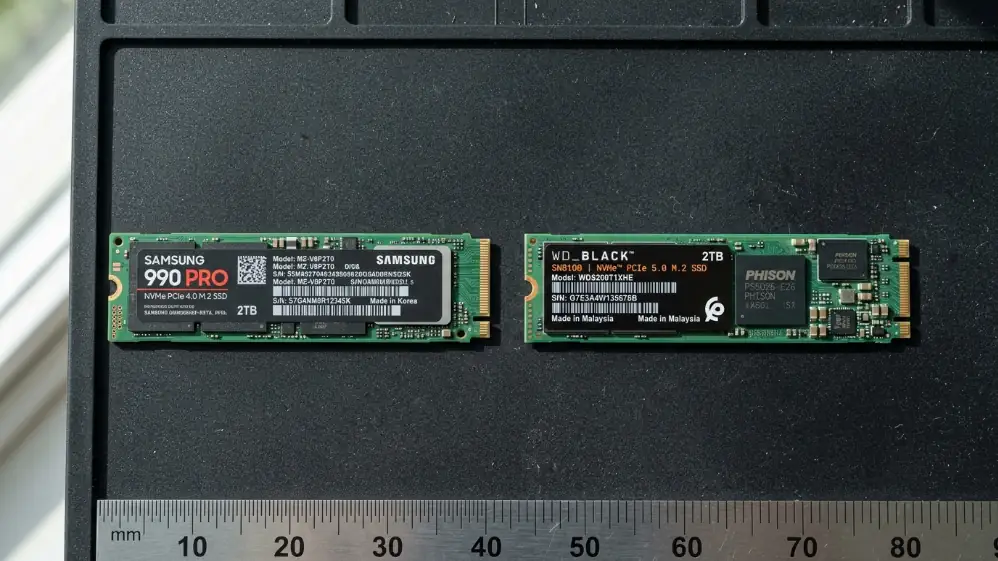
The standout Gen5 drives right now: the WD Black SN8100 leads at 14,900 MB/s read – Tom’s Hardware called it the fastest consumer SSD ever tested as of early 2026, keeping power draw under 7.5W, the Samsung 9100 PRO follows at 14,800 MB/s, the SK Hynix Platinum P51 at 14,700 MB/s, and the PNY CS3250 – Phison E28 controller – starts at $125.99 for 1TB. The Crucial T705 2TB has dropped to around $159.99 during sales.
PCIe 4.0: Still the smart gaming pick
Tom’s Hardware’s current pick for best SSD overall and best SSD for gaming is the Samsung 990 Pro, 7,450 MB/s read / 6,900 MB/s read, 1.2/1.55 million random IOPS, widely available for $80–120 at 2TB, the WD Black SN850X is the other consistent recommendation, with load speeds under 7 seconds in demanding titles.
Neither of these drives is a bottleneck for any game released in 2026, not even close.
The price gap in 2026
Gen5 pricing has come down hard since launch, worth seeing the actual numbers.
| Drive Type | 1TB Price | 2TB Price |
|---|---|---|
| PCIe 4.0 (Samsung 990 Pro) | ~$55–70 | ~$80–120 |
| PCIe 5.0 (PNY CS3250 / Crucial T705) | ~$125 | ~$150–160 |
| Price premium for Gen5 | ~$55–70 more | ~$40–80 more |
The gap has narrowed from launch, where Gen5 drives cost two to three times their Gen4 equivalents, at 2TB, you’re now looking at a $40–80 premium for Gen5, not absurd, but still real money for a gaming upgrade that delivers 1–3 seconds faster load times.
Put it this way: $40–80 spent on a better GPU tier, more RAM, or a faster CPU will show up in every single gaming session, the Gen5 premium shows up on the load screen before you even start playing, dropReference frames it well, going from 7,000 MB/s to 14,000 MB/s will have a far less visible impact than almost any other upgrade you could make at the same price.
Platform compatibility: Check this before buying
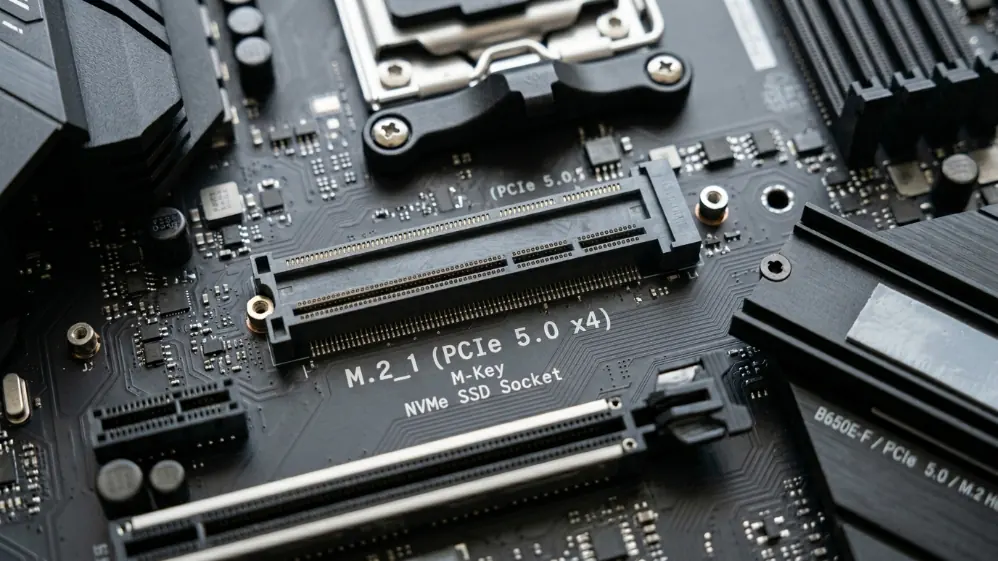
PCIe 5.0 M.2 SSDs only work at full Gen5 speed on AM5 and Intel LGA1851 motherboards, if you’re on AM4 (Ryzen 3000/5000 series) or LGA1700 (12th/13th gen Intel), a PCIe 5.0 drive drops to Gen4 speeds in your system, you’d be paying the Gen5 premium for Gen4 performance.
Worth checking before buying: on some Intel chipsets, enabling a PCIe 5.0 M.2 slot can downgrade your primary GPU slot from x16 to x8, that bandwidth reduction may affect GPU performance in GPU-sensitive scenarios, check your specific motherboard’s documentation before installing a Gen5 drive in anything other than the primary M.2 slot.
PCIe 6.0 is already in server testing by AMD, but consumer platform support is confirmed to be at least several years away there’s no reason to hold off on PCIe 5.0 waiting for Gen6 in a gaming context.
So should you upgrade?
Depends entirely on what you’re running now,
| Your Situation | Verdict |
|---|---|
| Running a SATA SSD | Upgrade to PCIe 4.0 — massive real-world gain |
| Running PCIe 3.0 NVMe | PCIe 4.0 is more than sufficient, Gen5 unnecessary |
| Running high-end Gen4 (990 Pro, SN850X) | No perceptible gaming benefit from Gen5 |
| Building new on AM5 or LGA1851 | Gen5 at $40–80 premium is reasonable for future-proofing |
| Budget is tight, GPU could be better | Skip Gen5, put money toward GPU |
| Content creator, video editing, large file work | Gen5 delivers real workflow gains worth considering |
The case for PCIe 5.0 in a gaming context is essentially future-proofing, if you’re building a new system on AM5 or LGA1851 today and the Gen5 premium has narrowed to $40–80, it’s a defensible choice. Not because it makes your games run better now, it genuinely doesn’t, but because storage needs evolve and Gen5 has years of headroom.
The case against: if you’re upgrading an existing system, the money goes further spent on GPU, RAM, or CPU, Tom’s Hardware still recommends the Samsung 990 Pro as their top gaming SSD, not because Gen5 isn’t faster, it is, but because that speed advantage doesn’t show up where it counts in actual gaming.
The bottom line
PCIe 5.0 SSDs are legitimately impressive technology, the raw sequential speeds are real, the thermal throttling issues of early drives are largely resolved, and pricing has come down to reasonable levels in 2026.
They just don’t make games run better in any meaningful way. Load times improve by 1–3 seconds, FPS is unchanged. DirectStorage hasn’t bridged the gap between storage speed and gaming performance the way it was supposed to.
If you’re building fresh on a compatible platform and the price gap is small, go Gen5, you won’t regret it and it ages better, If you’re upgrading specifically for gaming performance, the money does more work elsewhere.
Specs and performance data sourced from Tom’s Hardware SSD reviews and benchmark hierarchy, Newegg Insider PCIe 5.0 guide (March 2026), PCBuildRanked (March 2026), DropReference (February 2026), NZXT, DigitalCitizen, and XDA Developers (April 2026). Pricing reflects Amazon US and Newegg market data, May 2026.
Pingback: Best RX 9070 XT PC Build for 1440p (2026) - Fragtrix