
Two cards launched two months apart, both target the same 1080p and 1440p gaming market, both come in 8GB and 16GB versions and most models, particularly the 16GB variants, are selling at or above their MSRPs in May 2026.
The RTX 5060 Ti hit shelves April 16, 2025, starting at $379 for the 8GB and $429 for the 16GB, the RX 9060 XT followed June 5, 2025, at $299 and $349 respectively, on paper, AMD won the value argument from day one, the real-world picture in 2026 is a bit more complicated.
Here’s the full RTX 5060 Ti vs RX 9060 XT breakdown.
RTX 5060 Ti vs RX 9060 XT: specs breakdown
Both cards use 128-bit memory buses and target the same resolution range, the differences under the hood are more meaningful than the shared spec sheet suggests.
| Spec | RTX 5060 Ti | RX 9060 XT |
|---|---|---|
| Architecture | Blackwell (GB206) | RDNA 4 (Navi 44) |
| Shader Units | 4,608 CUDA cores | 2,048 stream processors (32 CU) |
| VRAM | 8GB or 16GB GDDR7 | 8GB or 16GB GDDR6 |
| Memory Bus | 128-bit | 128-bit |
| Bandwidth | 448 GB/s | 320 GB/s |
| TDP | 180W | 150–160W |
| PCIe Interface | PCIe 5.0 x8 ⚠️ | PCIe 5.0 x16 ✅ |
| Boost Clock | 2,572 MHz | 3,320 MHz |
| Launch MSRP (16GB) | $429 | $349 |
| Street Price (May 2026, 16GB) | ~$429–500 | ~$448–460 |
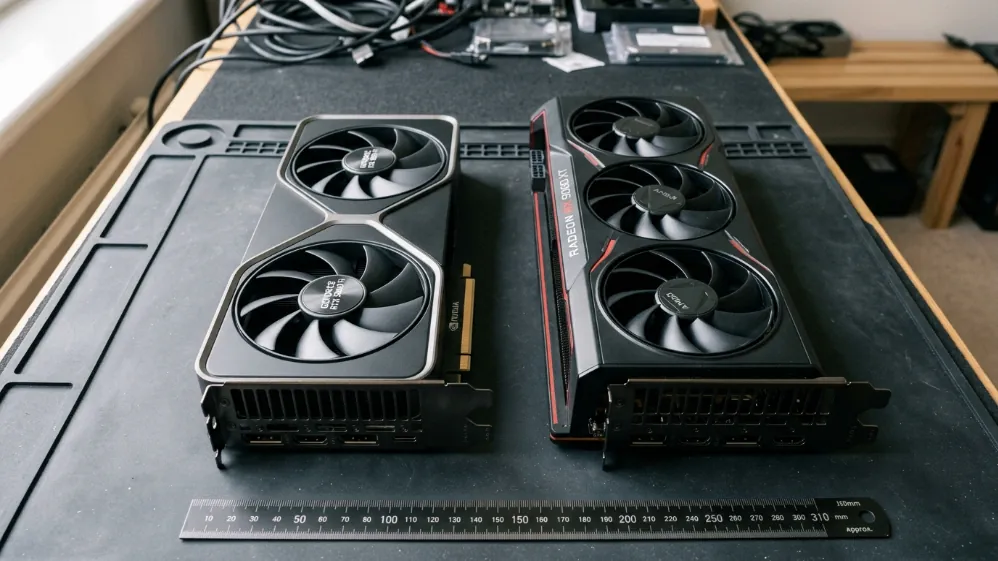
The PCIe x8 problem: Read this before buying
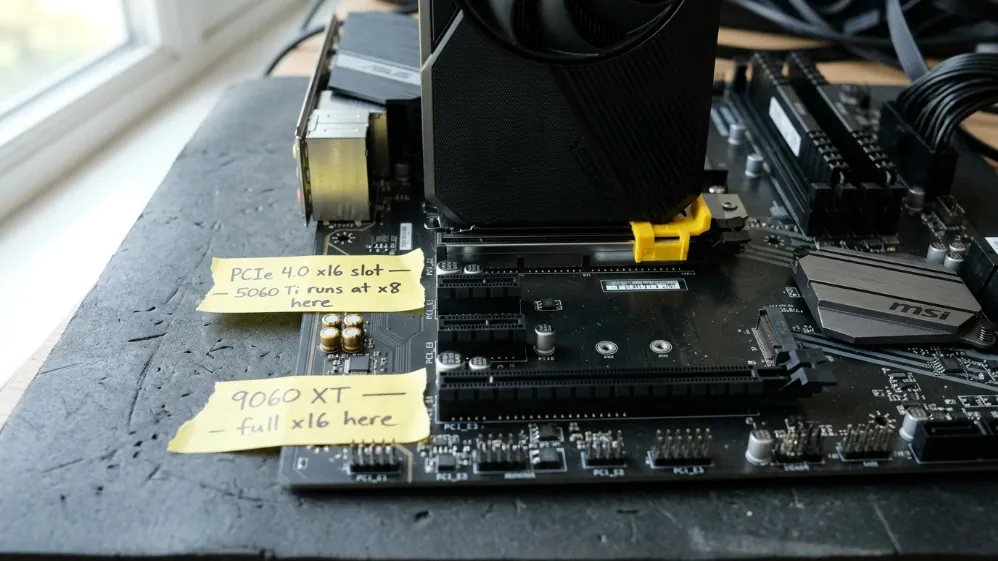
The PCIe interface difference deserves immediate attention, NVIDIA went with PCIe 5.0 x8 on the 5060 Ti, a controversial decision that can cost up to 10% performance in bandwidth-sensitive scenarios when the card sits in a PCIe 4.0 slot, the impact varies by game and resolution, and many titles won’t show a measurable difference, AMD chose PCIe 5.0 x16 for the 9060 XT. No bandwidth penalty, regardless of the platform
One thing to sort out first: Skip the 8GB version
Both Tom’s Hardware and Hardware Unboxed are direct on this: don’t buy the 8GB variant of either card for AAA gaming at 1440p in 2026, VRAM pressure in modern titles is real enough that the 8GB SKUs run into ceilings that spoil the experience.
Everything in this comparison assumes the 16GB version, if you’re looking at 8GB to save money, the savings aren’t worth it.
Gaming performance: 1080p and 1440p
Tom’s Hardware tested both cards in their RX 9060 XT 16GB review published June 2025, on a PCIe 5.0 platform, results reflect native rasterization without upscaling.
Rasterization: The raw numbers
At 1080p across 10 games: RX 9060 XT averaged 187 FPS vs RTX 5060 Ti at 194 FPS, the NVIDIA card leads by 3%.
At 1440p: RX 9060 XT averaged 134 FPS vs RTX 5060 Ti at 142 FPS, the gap widens slightly to 5%.
In rasterized gaming, the RTX 5060 Ti is consistently faster , not by a massive margin, but it’s measurable, for 1080p competitive gaming or 1440p AAA at high settings, the 5060 Ti does deliver more frames.
The PCIe 4.0 caveat
The caveat: those numbers assume a PCIe 5.0 or PCIe 5.0-capable PCIe 4.0 x16 system. On an older PCIe 4.0 platform using x16 bandwidth, the RTX 5060 Ti’s x8 interface chips away at that lead, Tom’s Hardware confirmed the performance loss reaches up to 10% in affected scenarios. In a PCIe 4.0 system, the RX 9060 XT can close or reverse that gap in bandwidth-sensitive titles, though in less demanding scenarios, the performance difference may remain minimal.
Ray tracing: NVIDIA’s advantage
The RTX 5060 Ti wins in ray tracing, and the gap is meaningful, blackwell’s 4th-generation RT cores give NVIDIA the structural advantage in RT-heavy titles. DLSS 4 Multi Frame Generation compounds the gap further by generating additional frames on top of rendered output, partially offsetting the FPS cost of ray tracing.
AMD’s RDNA 4 brought real improvements to ray tracing over RDNA 3, the RX 9060 XT is genuinely competitive in mixed-load RT scenarios, but in titles where ray tracing is pushed hard, cyberpunk 2077 path tracing, Alan Wake 2 full RT, the 5060 Ti leads.
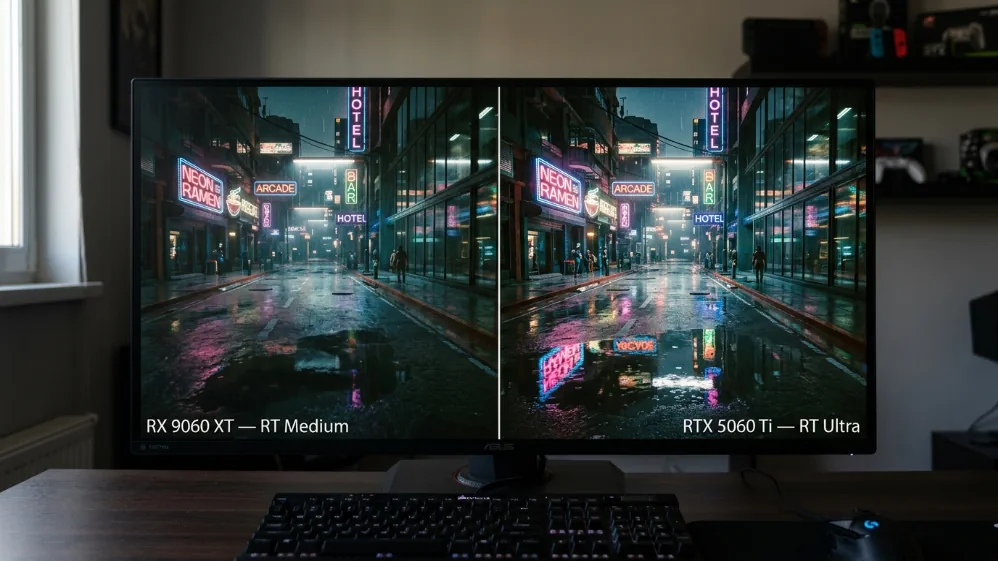
If ray tracing is how you play, NVIDIA is the right pick at this tier.
Upscaling: DLSS 4 vs FSR 4
DLSS 4 multi frame generation: NVIDIA’s real edge
DLSS 4 with Multi Frame Generation is NVIDIA’s big differentiator, in supported titles, it multiplies frame rates beyond what FSR 4’s frame generation currently delivers in most tested scenarios, though the gap narrows in titles with native FSR 4 support, for single-player AAA titles where you want maximum visual quality and smooth frame rates, the 5060 Ti’s DLSS 4 ecosystem has a real advantage.
FSR 4: Better than ever, not quite there yet
FSR 4 is AMD’s best upscaling yet, a genuine step up from FSR 3 in image quality, it’s also universally compatible, which matters, but DLSS 4 Multi Frame Generation specifically is not something AMD has answered with an equivalent product at this performance level yet.
The price reality in may 2026
Most 16GB models are selling above MSRP, which changes the value calculation compared to launch pricing. The 8GB RTX 5060 Ti remains close to its $379 MSRP.
| GPU | MSRP | Amazon May 2026 |
|---|---|---|
| RTX 5060 Ti 8GB | $379 | ~$379 |
| RTX 5060 Ti 16GB | $429 | ~$429–500 |
| RX 9060 XT 8GB | $299 | ~$359 |
| RX 9060 XT 16GB | $349 | ~$448–460 |
The gap that closed
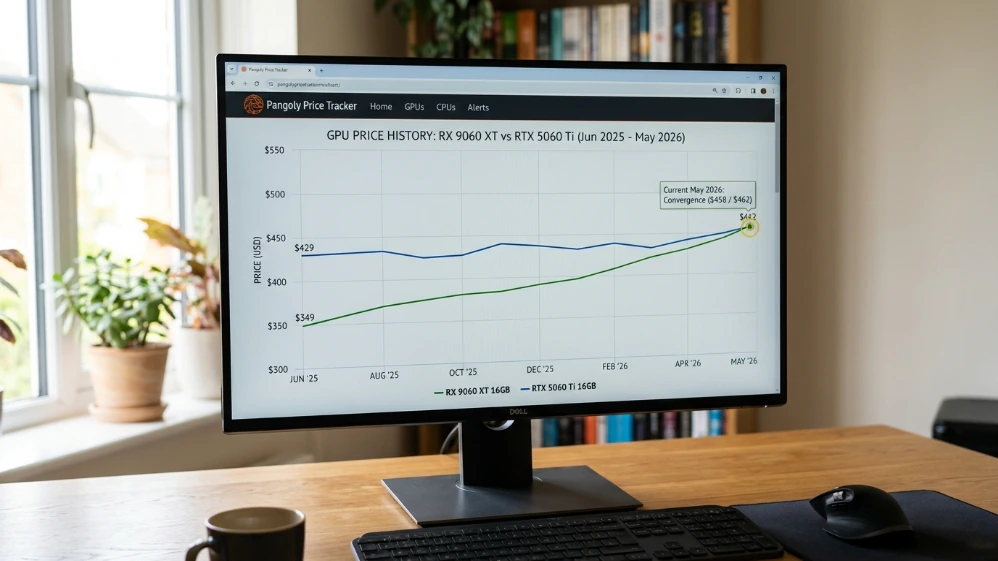
The RX 9060 XT launched with an $80 price advantage on the 16GB, at current street pricing, that gap has nearly closed, the 9060 XT 16GB sits at $448–460 while the 5060 Ti 16GB starts around $429 at base models and goes higher on premium AIBs.
When the price gap was $80, AMD’s value argument was clear, at roughly the same street price, the RTX 5060 Ti’s performance advantage becomes more relevant. Tom’s Hardware noted at launch that Nvidia’s offerings become less compelling the further down the price stack you go, a dynamic that still applies, though the pricing gap between these two specific cards has since narrowed considerably.
Tom’s Hardware verdict: The clearest summary
Tom’s Hardware’s RX 9060 XT 16GB review conclusion: “The AMD Radeon RX 9060 XT 16GB arrives as the far better and more attractive mainstream GPU option, the one the market has been waiting for, it makes Nvidia’s competing RTX 5060 and 5060 Ti 8GB cards look shortsighted.”
That verdict was written with the 8GB 5060 Ti as the comparison point and at launch pricing, with 16GB 5060 Ti cards in play at current prices, the picture is more balanced.
Who should buy which
| Your situation | Best pick |
|---|---|
| On a PCIe 4.0 system | RX 9060 XT — full x16 bandwidth, no penalty |
| Heavy ray tracing player | RTX 5060 Ti |
| DLSS 4 Multi Frame Generation matters | RTX 5060 Ti |
| Streaming with NVENC | RTX 5060 Ti |
| Maximum raster value at current prices | Roughly tied — check prices today |
| 1080p competitive, max FPS | RTX 5060 Ti (3% lead) |
| 1440p AAA, raster settings | RX 9060 XT (competitive within 5%) |
| Building fresh on AM5/LGA1851 PCIe 5.0 | Either — no interface penalty |
The verdict
RTX 5060 Ti: Buy this if
The RTX 5060 Ti is the pick for ray tracing, DLSS 4 Multi Frame Generation, NVENC streaming, and anyone on a PCIe 5.0 system where the x8 interface limitation doesn’t apply, it’s genuinely faster across the board, and at similar prices that matters more than it did at launch.
RX 9060 XT: Buy this if
The RX 9060 XT is the pick for PCIe 4.0 systems where NVIDIA’s x8 interface costs real frames, for anyone who doesn’t need RT or DLSS 4 MFG, and for buyers who catch it at or near MSRP. At $349 it’s a steal, at $460 it’s a decent card competing against an equally decent card at a similar price.
Check prices on the day you buy. The gap between them in May 2026 is close enough that a $30–40 swing decides the winner.
Performance data from Tom’s Hardware RX 9060 XT 16GB review (June 2025) and RTX 5060 Ti launch coverage (April 2025). Specifications from NVIDIA official (nvidia.com), AMD official (amd.com), VideoCardz, and XFX official product page. Pricing from BestValueGPU price tracker (May 2026), Pangoly price history (May 2026), gpudeals.net (May 2026), and Tom’s Hardware market pricing notes. PCIe x8 performance impact confirmed by Tom’s Hardware.
Pingback: Best RTX 5070 Prebuilt Gaming PC in 2026 - Fragtrix
Pingback: DLSS 4 Setup Guide: Frame Generation Explained - Fragtrix