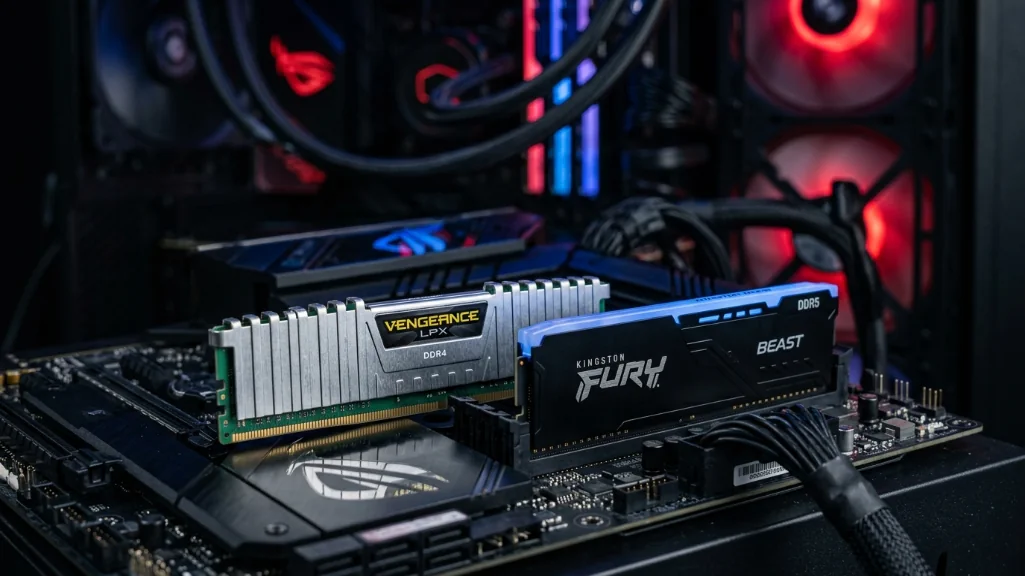
if you’ve been shopping for RAM lately, you already know the market is a mess, prices have doubled, tripled in some cases, and the same 32GB kit you bought for under $100 in early 2025 might now sit well above $300, new platforms like AMD’s AM5 and Intel’s Arrow Lake don’t give you a choice anymore it’s DDR5, full stop. so the question “DDR4 or DDR5?” has quietly shifted into “does DDR5 speed actually matter, and what am i really getting for it?” that’s what we’re breaking down here, with real benchmark data and no fluff. This ddr4 vs ddr5 gaming comparison covers what actually changed, and whether the newer standard is worth it for your setup.
DDR4 vs DDR5 gaming: what actually changed
A redesign, not just a speed bump
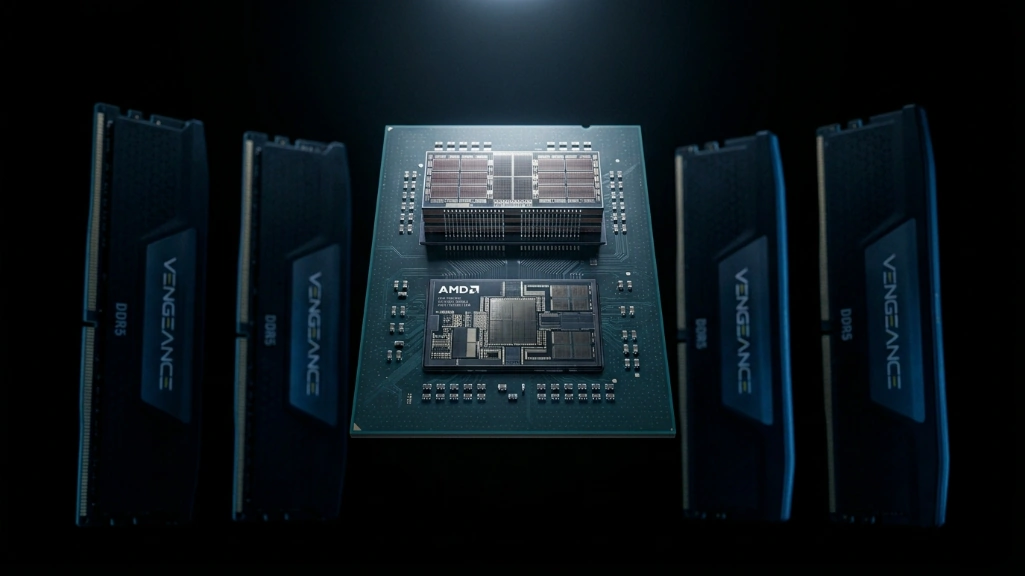
before getting into frame rates, it helps to understand what the architecture change actually means, DDR4 uses a single 64 bit channel per module, DDR5 splits that into two independent 32 bit sub channels operating simultaneously, which effectively doubles the potential data throughput, combine that with a higher burst length, an integrated power management chip on the module, and native on die ECC, and you have a fundamentally different design not just a speed bump.
The latency myth, finally settled
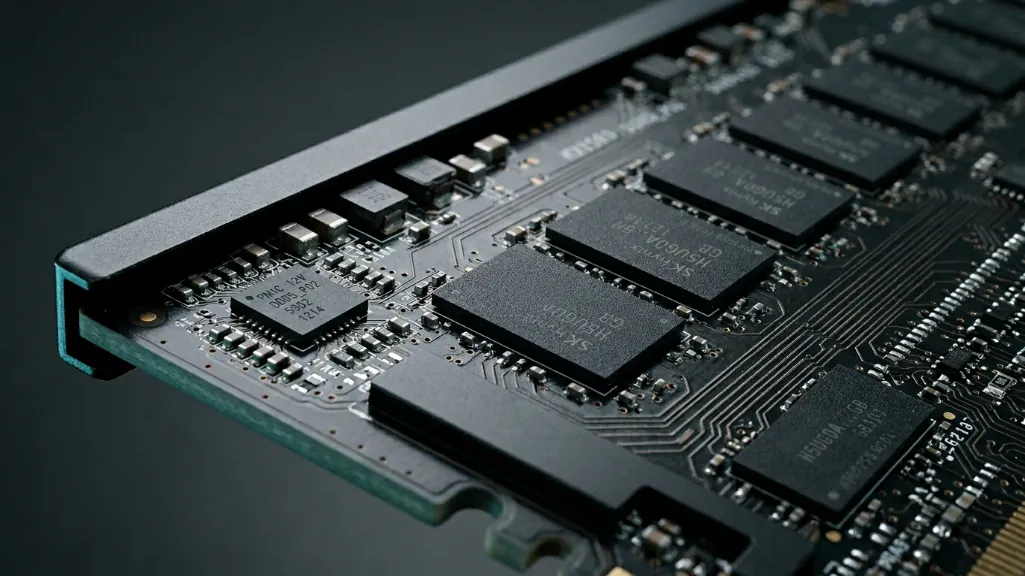
one thing that confused a lot of people at DDR5’s launch was the latency, early kits shipped with CAS Latency ratings as high as CL40, which sounds bad compared to DDR4’s typical CL16 to CL18, but CAS Latency numbers don’t tell the full story on their own. what matters is the absolute latency in nanoseconds, calculated as (CL ÷ frequency in MHz) × 1000. run that formula and the picture clears up fast.
| Memory Config | CL | Frequency | Absolute Latency |
|---|---|---|---|
| DDR4-3200 CL16 | 16 | 1600 MHz | 10.0 ns |
| DDR5-4800 CL40 (launch) | 40 | 2400 MHz | 16.7 ns |
| DDR5-6000 CL30 (current) | 30 | 3000 MHz | 10.0 ns |
| DDR5-7200 CL34 | 34 | 3600 MHz | 9.4 ns |
early DDR5 was genuinely slower in latency terms, modern DDR5-6000 CL30 kits are at parity with DDR4-3200 CL16, the latency argument against DDR5 is essentially dead in 2026.
What the benchmarks actually show
The game engine gap
this is where context matters enormously, not all games benefit from faster memory the same way, and resolution plays a huge role in how much the difference shows up at all.
TechSpot tested 21 games on an Intel Core i9-14900K using DDR5-7200 against DDR4-4000, and found DDR5 was around 7% faster on average FPS at 1080p with 1% lows improving by roughly 10%, that’s the broad picture. but dig into individual titles and the range is striking.
| Game | DDR5 Gain — Avg FPS (1080p) | DDR5 Gain — 1% Lows (1080p) |
|---|---|---|
| Shadow of the Tomb Raider | up to +26% | significant |
| Spider-Man Remastered | up to +20% | notable even at 4K |
| Baldur’s Gate 3 | +14% | +14% (+20 fps) |
| Star Wars Jedi: Survivor | +11% | +35% |
| Watch Dogs: Legion | +14% | noticeable at 1440p too |
| Cyberpunk 2077: Phantom Liberty | +9% | — |
| A Plague Tale: Requiem | +7% | up to +15% |
| The Last of Us Part I | +9% | +17% |
| Halo Infinite | ≈ parity | — |
| Call of Duty: MW III | ≈ parity | — |
| Warhammer (total war) | −5% | DDR4 wins |
so no, DDR5 doesn’t uniformly dominate. in some titles particularly those that lean heavily on CPU bandwidth the gap can be transformative, in others, you’d never know the difference, and in at least one case, DDR4 came out ahead.
a more recent TechSpot test on an Intel Core i5-12400F a CPU with less L3 cache and therefore more dependent on raw memory bandwidth pushed those numbers higher, Marvel Rivals showed a 33% improvement at medium settings going from DDR4-3200 to DDR5-6000, with Cyberpunk 2077 and Horizon Zero Dawn Remastered both landing around +24%, Assassin’s Creed Shadows was essentially identical across both memory types at Ultra High settings the GPU was doing all the heavy lifting
Resolution changes the equation
that last point is the one to hold onto: resolution kills the gap. at 1440p and 4K, the graphics card becomes the bottleneck in most games, and the memory type barely moves the needle. the table below gives you a rough idea of how the advantage shifts depending on where you’re gaming.
| Resolution | Typical Scenario | DDR5 Advantage |
|---|---|---|
| 1080p | CPU has headroom, GPU not maxed | noticeable — up to +26% in bandwidth-sensitive titles |
| 1440p | mixed CPU/GPU load | reduced — gains shrink significantly in most games |
| 4K | GPU-bound in nearly every title | minimal — often within margin of error |
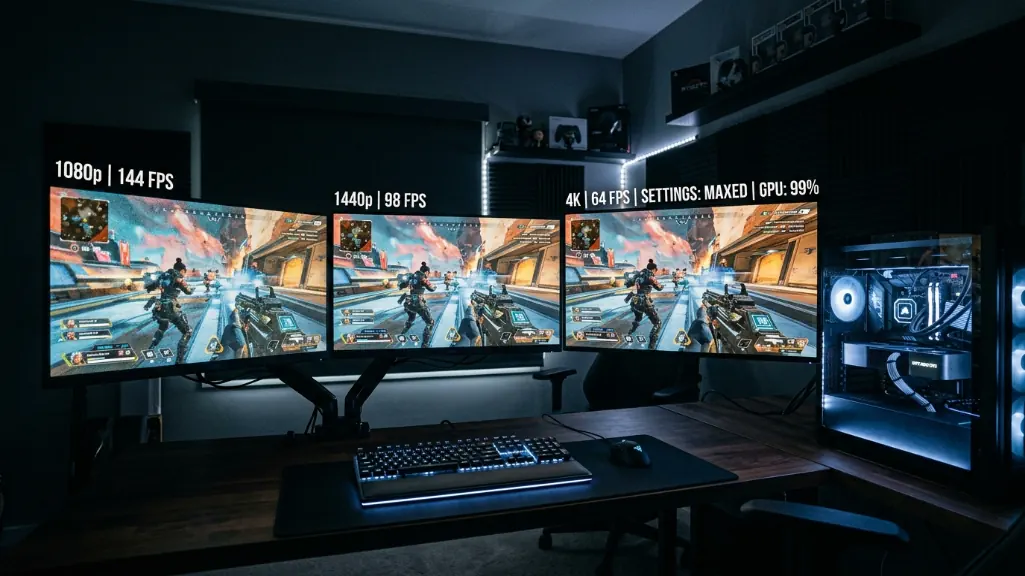
if you’re gaming at 4K with a high end GPU, DDR5 versus DDR4 is unlikely to change your experience in any meaningful way, at 1080p on a high refresh rate setup where the CPU has room to breathe, it matters considerably more especially in frame consistency, not just peak FPS.
Does your CPU actually care about DDR5 speed?
X3D chips: the cache makes RAM almost irrelevant
not all CPUs respond to faster memory the same way, and in 2026 this nuance matters more than ever
AMD’s X3D lineup the 7800X3D, 9800X3D, and 9850X3D is nearly memory agnostic by design, the massive L3 cache absorbs most of the workload that would otherwise demand high memory bandwidth, AMD’s own internal testing across more than 30 games showed the average frame rate difference between DDR5-4800 and DDR5-6000 on the 9850X3D stays below 1%, TechSpot’s 9800X3D review confirmed minimal differences across six tested memory configurations, if you’re gaming on an X3D chip, faster RAM is essentially bragging rights.
AM5 non-X3D and arrow lake: a different story
for non-X3D AM5 CPUs, there’s a real architectural reason why DDR5-6000 is the sweet spot, AMD’s Infinity Fabric has a memory controller (UCLK) that tops out at around 3000 MHz before hitting stability constraints, DDR5-6000 runs at exactly 3000 MHz effective, allowing a clean 1:1 ratio between the memory controller and the memory frequency, push past that and the ratio drops to 2:1, introducing latency penalties that partially cancel out the bandwidth gains, the difference between DDR5-6000 and DDR5-8000 on AM5 is real, but rarely worth the premium.
Arrow Lake plays by different rules, Intel’s Core Ultra 200S platform benefits more noticeably from faster memory than AMD’s AM5 does, and Intel itself claims around a 5% gaming uplift going from DDR5-6400 to DDR5-8000, the Arrow Lake Refresh lineup now supports DDR5-7200 as standard, that said, the memory sensitivity cuts both ways you need to spend more on RAM to get the most out of these chips.
| Platform | CPU Examples | DDR5 Sweet Spot | Memory Sensitivity |
|---|---|---|---|
| AM5 — Zen 4 | Ryzen 7700X, 7600X | DDR5-6000 CL30 | moderate |
| AM5 — Zen 5 (non-X3D) | Ryzen 9700X, 9600X | DDR5-6000 to 6400 CL30 | moderate |
| AM5 — X3D | 7800X3D, 9800X3D, 9850X3D | DDR5-6000 CL30 | very low |
| LGA1851 — Arrow Lake | Core Ultra 285K, 265K | DDR5-6400 CUDIMM / 8000 UDIMM | higher than AMD |
| LGA1700 — 12th–14th gen | i5-12400F, i7-14700K | DDR4-3600 CL16 or DDR5-6000 | varies by title |
The 2026 reality: both are expensive now
it would be easy to say “just go DDR4 to save money” but that ship has largely sailed, DRAM prices rose by roughly 172% throughout 2025, driven by manufacturers redirecting capacity toward high bandwidth memory for AI data centers, DDR5 took the hardest hit, but DDR4 wasn’t spared either, a 32GB DDR4 kit that cost between $60 and $90 in October 2025 now sits at $150 to $180 or above, the traditional budget argument for DDR4 has weakened considerably.
what this means practically is that the choice in 2026 is less about upfront cost and more about platform. if you’re building new, AM5 and Arrow Lake both require DDR5 there’s no decision to make, DDR4 is only relevant if you’re upgrading an existing LGA1700 or AM4 system, and buying faster RAM alone won’t dramatically change your gaming experience without also swapping the CPU and motherboard.
Who should actually care about DDR5?
The practical breakdown
the honest answer is: it depends on what you’re running and how you’re running it
if you’re gaming at 1080p on a non X3D CPU with a GPU that has headroom think a Ryzen 9700X or a budget Intel build DDR5 can make a tangible difference in games that demand memory bandwidth, modern titles built on heavier engines tend to show the gap more clearly than older ones, frame consistency improvements, particularly in 1% lows, are often more noticeable in practice than the average FPS numbers suggest
if you’re on an X3D chip at any resolution, memory speed is essentially a non issue for gaming, spend that money on storage or a better GPU instead
if you’re gaming at 1440p or 4K with a capable graphics card, the memory type is one of the last things you should be optimizing for, the GPU is doing the heavy lifting, and the margin between DDR4 and DDR5 collapses almost entirely.
and if you’re sitting on an existing DDR4 build that’s performing well? there is no reason to switch platforms just for a memory upgrade, the performance gains in gaming don’t come close to justifying a new CPU, motherboard, and DDR5 kit together, upgrade your GPU first, your storage second, and revisit the platform question when you’re ready for a full rebuild.
DDR5 is the present and the future but faster isn’t always better, and more expensive definitely isn’t always smarter.