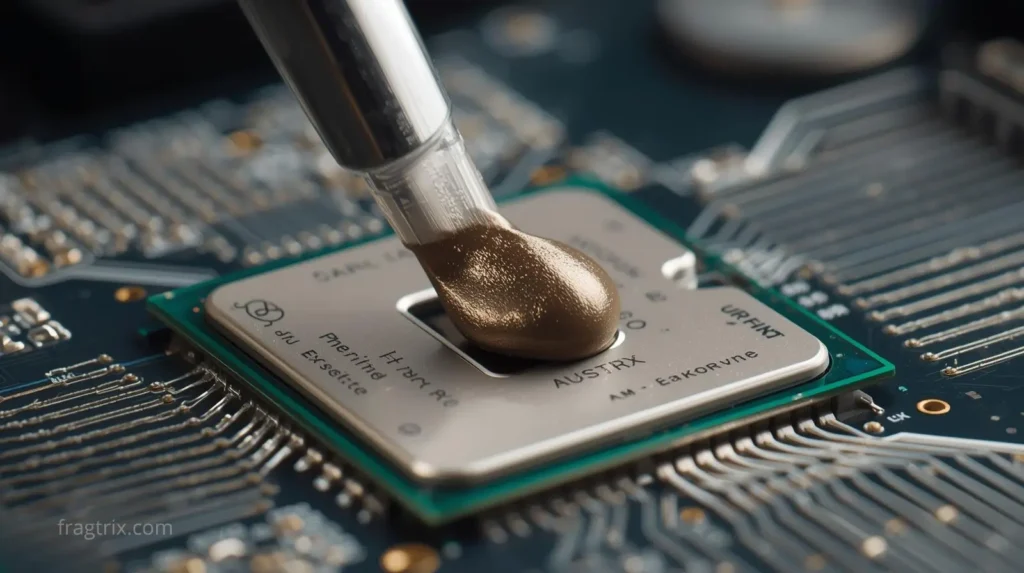
Thermal paste serves a critical function in PC cooling by minimizing microscopic air gaps between the CPU’s integrated heat spreader and the cooler surface. This enables efficient heat transfer from the processor to the cooling system, directly impacting performance and overclocking potential.
Understanding Thermal Interface Materials
Thermal compounds, also called thermal grease or TIM, consist of ceramic or metallic materials suspended in proprietary binders. These formulations vary in electrical conductivity, application difficulty, and thermal performance. Traditional pastes are generally non-conductive and safe for beginners, while liquid metal compounds offer superior performance but require extreme caution due to electrical conductivity. A single misplaced drop can destroy a motherboard or CPU.
Phase change materials represent another category, starting as solids before liquefying under heat and pressure. These require longer burn-in periods and may underperform in lower power scenarios. Thermal pads and sheets, including graphene-based options, provide mess-free alternatives to traditional pastes.
Top Performers Based on Extensive Testing
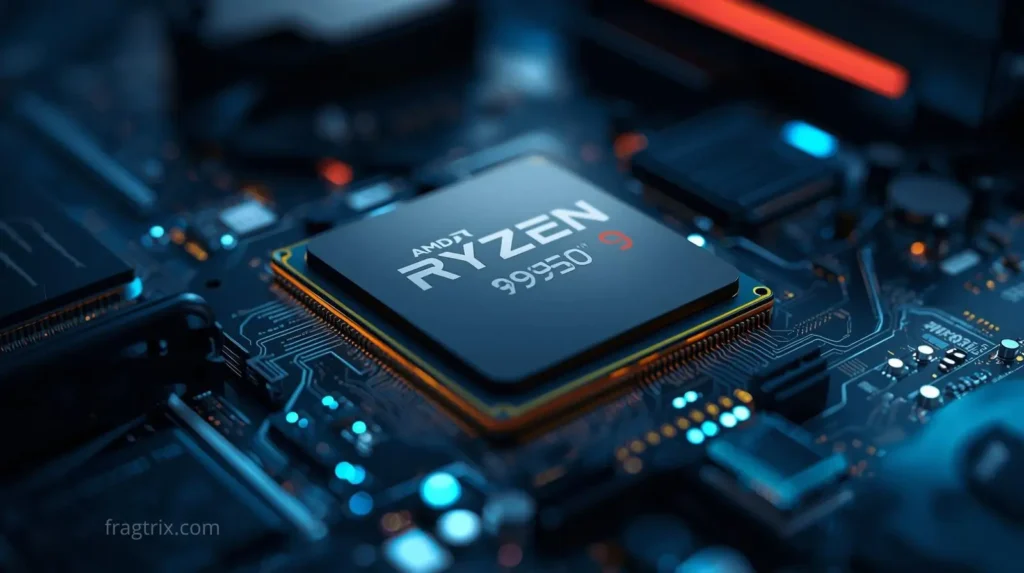
Testing involved 37 compounds with AMD Ryzen 9 9950X and over 90 compounds with Intel Core i9 processors using standardized conditions.
Premium Traditional Pastes
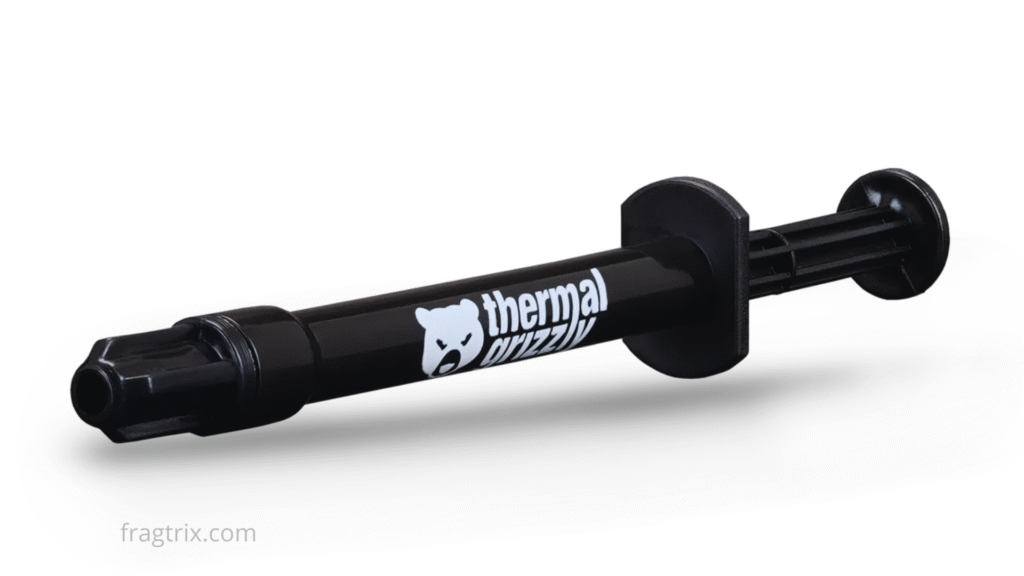
Thermal Grizzly Duronaut delivers the best overall performance among traditional pastes, offering excellent thermal conductivity and long-term stability. While priced at $10 per gram, the performance justifies the investment. Arctic MX-6 follows closely as runner-up, providing nearly identical thermal results at just $2 per gram, making it exceptional value for enthusiasts.
For air cooling systems specifically, ID-Cooling Frost X45 achieved the best results at only $3.50 per gram. Noctua NT-H2 rounds out the premium category with solid performance, included cleaning wipes, and budget-friendly pricing at $3.70 per gram.
Thermal Pads
Thermal Grizzly Kryosheet revolutionizes the category by outperforming all traditional pastes on AMD Ryzen systems. This graphene-based pad requires no cleanup, proves reusable, and delivers performance rivaling liquid metal. The $16 per sheet cost is offset by reusability, though optimal results require high mounting pressure.
Thermal Grizzly PhaseSheet offers strong performance as a phase change material but demands extensive burn-in through multiple heating cycles. Users should expect peak temperatures initially until the material fully liquefies.
Liquid Metal Compounds
Alphacool Eisfrost Extreme leads liquid metal options, outperforming competitors by 0.5°C. BeQuiet DC2 Pro matches Thermal Grizzly Conductonaut’s performance at significantly lower cost. Both require expert application skills due to electrical conductivity risks.
Performance Comparison
| Category | Product | Thermal Performance | Ease of Use | Price/Value | Best For |
|---|---|---|---|---|---|
| Premium Paste | Thermal Grizzly Duronaut | Excellent | Easy | High cost | Maximum performance |
| Value Paste | Arctic MX-6 | Excellent | Easy | Best value | Budget enthusiasts |
| Air Cooling | ID-Cooling Frost X45 | Excellent | Easy | Great value | Tower coolers |
| Traditional | Noctua NT-H2 | Very Good | Easy | Good value | General builds |
| Thermal Pad | Kryosheet | Exceptional | Very Easy | Premium | Reusable solution |
| Liquid Metal | Alphacool Eisfrost | Superior | Difficult | Premium | Extreme overclocking |
| Liquid Metal | BeQuiet DC2 Pro | Superior | Difficult | Better value | Performance/cost balance |
Testing Methodology
All compounds underwent standardized testing using AMD Ryzen 9 9950X with Arctic Liquid Freezer III Pro 240 AIO cooler on ASUS ROG Strix B850-E Gaming Wifi motherboard. Each paste received appropriate burn-in periods: 30 minutes for traditional compounds, extended cycles for phase change materials, and minimal burn-in for liquid metals.
Testing measured average CPU temperatures during 15-minute Cinebench R23 multi-core stress tests after burn-in completion. Average temperature proved more consistent than peak measurements, with most results showing variance within 0.3°C during verification testing. When results appeared questionable, different tubes were tested to account for manufacturing variations.
Key Considerations
Application Factors: Proper paste application and cooler mounting significantly impact performance. Too much paste creates insulation, while too little leaves gaps. The spread pattern matters less than coverage and thickness.
Budget vs Performance: High-end pastes offer measurable improvements, but budget options like Arctic MX-6 deliver nearly identical results at fraction of the cost. For standard builds without extreme overclocking, mid-range pastes provide excellent value.
Safety Concerns: Electrically conductive pastes require extreme caution during application. Non-conductive compounds suit beginners and reduce risk of component damage from spillage or over-application.
Longevity: Premium pastes often feature enhanced stability for long-term use without degradation. Budget options may require more frequent reapplication in high-performance systems.
Cooling System Compatibility: Some compounds perform differently with air versus liquid cooling. Thermal pads require high mounting pressure for optimal contact. Liquid metals cannot be used with aluminum coolers due to chemical reactions.
Practical Recommendations
System builders should match thermal paste selection to their specific needs rather than defaulting to most expensive options. Standard gaming PCs benefit from value-oriented pastes like Arctic MX-6 or ID-Cooling Frost X45. Extreme overclockers gain measurable advantages from liquid metal compounds despite application complexity. Users frequently remounting coolers may prefer reusable thermal pads despite higher initial cost.
Even budget-conscious builders can achieve excellent cooling performance, as testing demonstrates minimal temperature differences between mid-range and premium traditional pastes. The difference between good and excellent thermal paste typically measures just 1-2°C under stress testing, which rarely impacts real-world performance for most users.