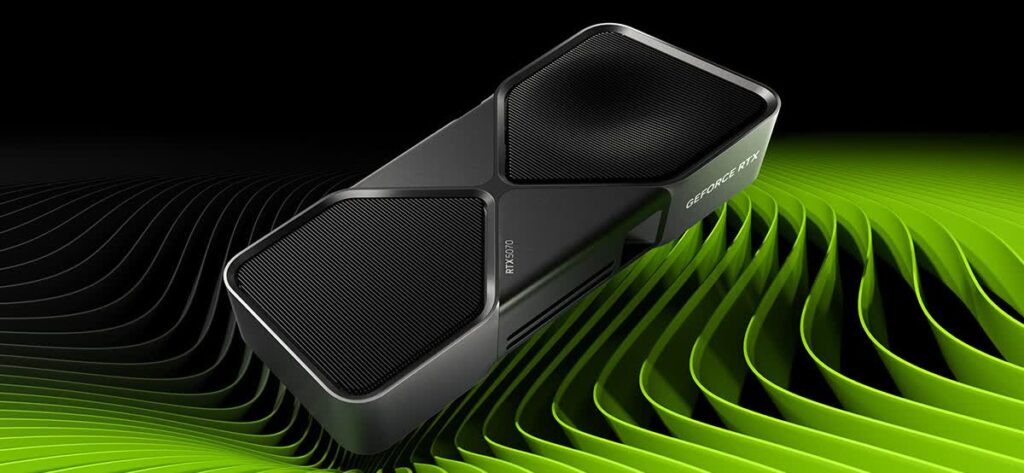
there is a version of this article that just compares two graphics cards and picks a winner. that article would be useless in august 2026, because the interesting question is no longer which card is faster. it is simpler and harder at once: should you upgrade your gpu in 2026, or keep what is already sitting in your case?
so this guide does both. it answers the rtx 5070 versus rx 9070 xt question properly, and it tells you honestly when the answer is “keep what you have.”
the price situation has changed the entire question
both of these cards launched in march 2025. the rtx 5070 came in at $549 and the rx 9070 xt at $599, a $50 gap that made the comparison genuinely interesting.
that gap is gone. tom’s hardware tracks the lowest available us price for every current gpu, and as of 17 august 2026 the rtx 5070 sits at $699 while the rx 9070 xt sits at $719. twenty dollars apart. the 5070 has drifted roughly 27% above its own msrp, the 9070 xt roughly 20%.
why waiting for a sale will not help
this is not a sale-timing problem you can wait out. tom’s hardware points out that the lowest prices ever recorded for these cards are barely below launch msrp, and that major sales events like black friday and prime day have produced almost no meaningful discounts this generation.
the cause is the memory shortage. ai data centre demand has swallowed dram supply, and nvidia is reportedly allocating memory based on profit per gigabyte, which pushes higher-vram gaming cards down the priority list.
what this means practically is that the two cards are now priced as near-equals, and the comparison stops being about value per dollar and starts being about which card is simply better.
what you actually get for the money
| rtx 5070 | rx 9070 xt | |
|---|---|---|
| architecture | blackwell | rdna 4 |
| vram | 12 gb gddr7 | 16 gb gddr6 |
| memory bus | 192-bit | 256-bit |
| memory bandwidth | 672 gb/s | 640 gb/s |
| board power | 250 w | 304 w |
| launch msrp | $549 | $599 |
| us price, 17 aug 2026 | $699 | $719 |
| lowest price ever | $479 | $599 |
if you want the raw benchmark breakdown rather than the buying decision, that is a separate piece: our full rtx 5070 vs rx 9070 xt benchmark comparison goes title by title at 1440p.
the power figure matters more than it looks. 54 watts is not nothing when you are working out whether your existing psu survives the upgrade, and it feeds directly into case temperatures and fan noise. amd recommends a 750 w supply for the 9070 xt. nvidia genuinely wins this one.
the vram figure matters more still, and we will come back to it.
rasterisation: amd wins, but by how much depends on who you ask
this is where you have to be careful with numbers, because the answer has moved over time.
what the benchmark numbers say
techpowerup’s current test suite puts the rx 9070 xt roughly 10% ahead of the rtx 5070 at 1440p, with the gap widening at 4k. their earlier review of the same card, on an older suite, put the lead closer to 20%. gamersnexus recorded leads of 21% and 26% over the 5070 in individual rasterised titles at launch.
why the numbers disagree
the spread is not sloppiness, it is driver maturity. techpowerup reported that hardware unboxed compared current adrenalin drivers against launch review drivers across sixteen games and found the rx 9070 xt gained 9% raster performance at 1440p, while the rtx 5070 ti gained only 2.5% over the same period. amd shipped a card that was underperforming its own silicon, then fixed it.
so the honest summary is that the 9070 xt is meaningfully faster in rasterised games at 1440p, somewhere in a 10 to 20% band depending on title and test suite, and that the gap grows at 4k where the memory advantage compounds.
ray tracing: nvidia still wins, sometimes enormously
if you flip ray tracing on, the picture inverts, and in the worst cases it inverts hard.
the worst case for amd
gamersnexus tested black myth: wukong at 4k with upscaling and ray tracing enabled, deliberately amd’s worst-case scenario, and the rtx 5070 came out 38% ahead. that is not a rounding error. it is the difference between a game being playable and not.
how much the gap has actually narrowed
black myth is the extreme. rdna 4’s ray accelerators are a real generational step up from rdna 3, and techpowerup’s newest suite now shows the 9070 xt sitting within about 4% of the rtx 5070 ti in ray-traced workloads, a card that costs $979 at current us pricing. the gap between amd and nvidia in ray tracing is narrower than it has been in years. it just has not closed.
there is also dlss 4 and multi frame generation, which remain nvidia’s strongest software argument. whether that matters to you depends entirely on whether you play the titles that support it well.
the 12 gb problem
the rtx 5070 has 12 gb of vram. the rx 9070 xt has 16 gb.
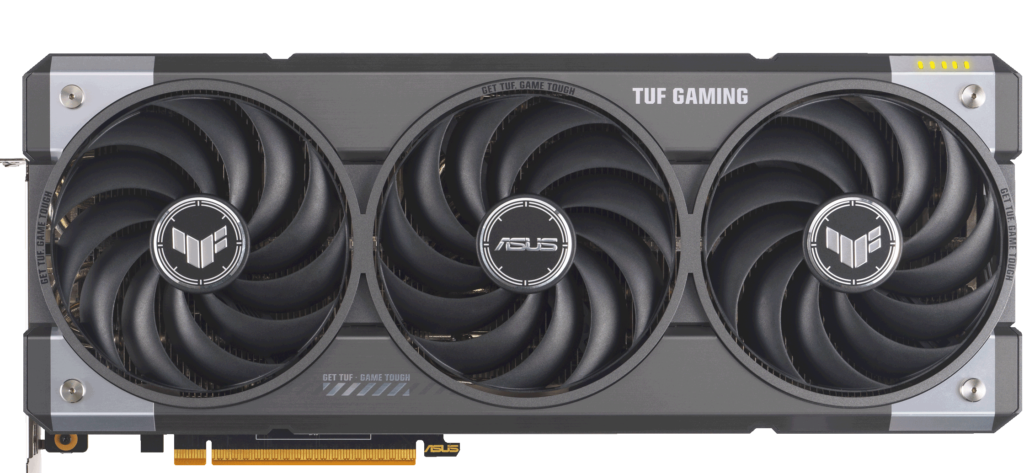
at 1440p today, in most games, 12 gb is enough. the issue is what “today” means when you are spending $700 on a card you intend to keep for four or five years. techpowerup’s reviewer flagged this directly, noting that 12 gb already becomes an issue in some titles at 4k with ray tracing and frame generation running simultaneously, and that future titles are only going to ask for more.
this is the single strongest argument for the amd card. you are not paying extra for that memory anymore. at a $20 price difference you are getting 4 gb of headroom essentially for free.
should you upgrade at all?
the uncomfortable answer is that neither of these cards is a good purchase at current pricing. they are simply the purchase available.
so the question worth asking is not which card wins, but whether your current one is far enough behind to justify paying roughly a quarter over msrp. if your card is two generations old and you have moved to a 1440p high refresh monitor it is likely holding you back, and the jump is large enough that inflated pricing still nets you a real gain. if your card is from the immediately preceding generation and handles your games at your resolution, the uplift you are buying does not match what you are paying for it.
there is one detail worth knowing if you decide to sit this out. the same shortage inflating new card prices is inflating used ones, so whatever you are currently running is worth more than it would be in a normal market. that cuts both ways.
is waiting a real option?
not really, and this is where the market works against you.
how long the wait actually is
tom’s hardware reports that the next generation of graphics cards is not rumoured to arrive until late 2027 or even 2028. that is a minimum of a year of waiting, more likely longer. and whenever it lands, it launches into the same constrained memory market that inflated current prices, so there is no particular reason to expect it to arrive cheap.
waiting makes sense if your current card still does the job and you can sit tight. waiting does not make sense as a price strategy. tom’s hardware puts it plainly: holding out for the next generation generally is not going to save you money.
the cheaper way out
the one genuine alternative is dropping a tier. here is how this segment stacks up, using the lowest available us prices tracked by tom’s hardware on 17 august 2026.
| card | price | msrp | vs msrp | vram |
|---|---|---|---|---|
| rx 9070 gre | $529 | $549 | below msrp | 12 gb |
| rx 9070 | $629 | $549 | +15% | 16 gb |
| rtx 5070 | $699 | $549 | +27% | 12 gb |
| rx 9070 xt | $719 | $599 | +20% | 16 gb |
| rtx 5070 ti | $979 | $749 | +31% | 16 gb |
the rx 9070 gre is the only card in this range still selling below its own msrp, which in this market is remarkable on its own. but read the vram column before you get excited. the gre runs 12 gb on a narrower 192-bit bus, and tom’s hardware found that this bites hard once ray tracing is involved: at 1440p with rt enabled its 1% lows fall behind the rtx 5060 ti 16 gb, and at 4k with rt it drops to roughly half the standard rx 9070, landing behind a previous-generation rx 7800 xt in some scenes. it is a genuinely good 1440p rasterisation card and a poor ray tracing one.
the rtx 5070 ti carries the largest premium over msrp of anything here, $260 above a 9070 xt it only narrowly beats. what it does have is 16 gb, which the 5070 does not. if you are set on nvidia and you want memory headroom, it is the only way to get both, and you pay heavily for the privilege.
if $700 is painful, the plain rx 9070 is the sensible landing spot. same 16 gb as the xt, $90 less, and closer to its msrp than anything nvidia is selling right now.
the verdict
buy the rx 9070 xt.
why amd takes it
at a $20 price difference, the amd card gives you roughly 10 to 20% more rasterised performance at 1440p, four extra gigabytes of vram, and a wider memory bus. that is a straightforward win on the things that will still matter in three years.
when to buy nvidia instead
buy the rtx 5070 if ray tracing is genuinely central to how you play, if dlss 4 support in your specific game library is strong, or if you are working with a psu and a case that will not comfortably absorb another 54 watts. those are real reasons, not consolation prizes.
when to buy neither
if what you already own still runs your games at your resolution, buy neither. this is not a good market to spend $700 in, and the card sitting in your case is closer to these two than the price tags suggest.