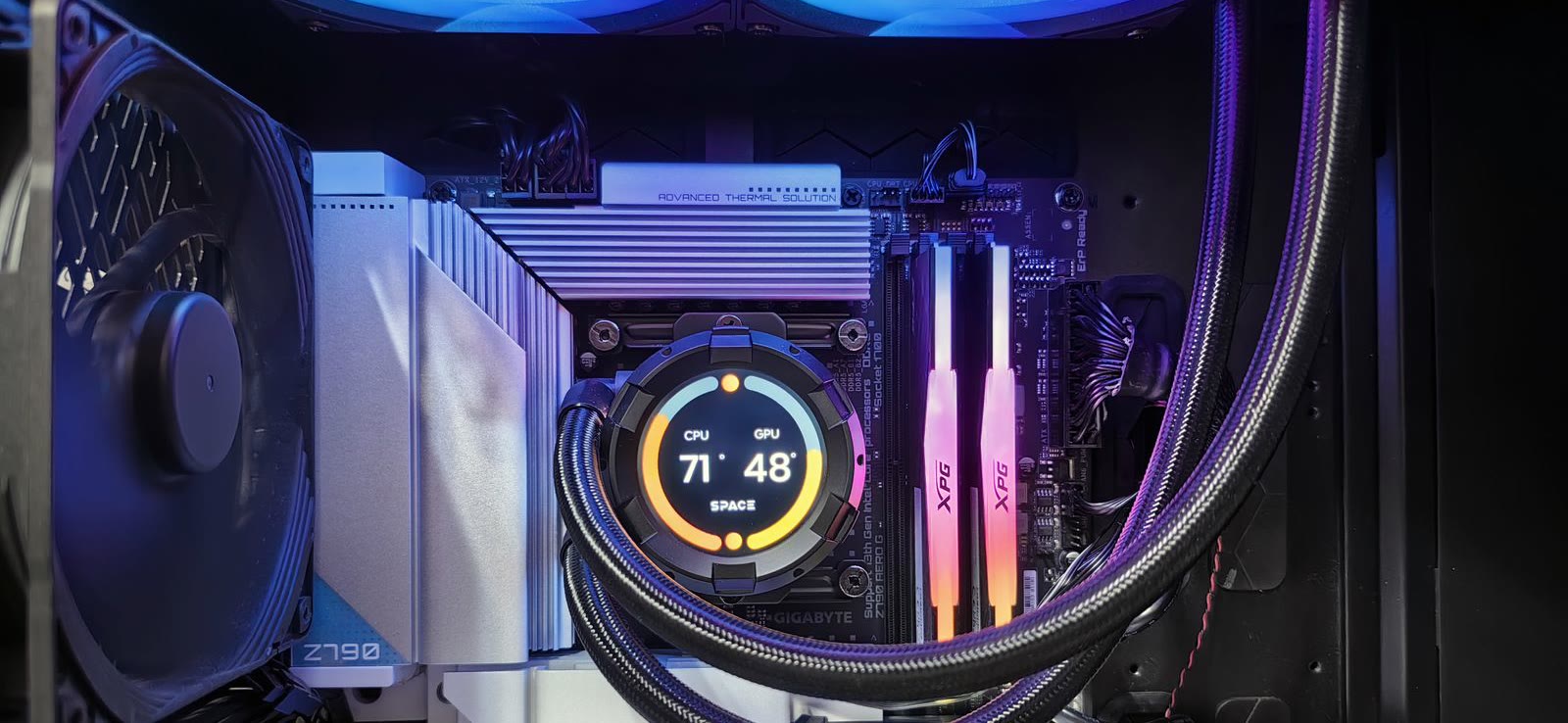
ask this question anywhere and you’ll get two confident answers. air cooling is all anyone needs and AIOs are jewellery. or liquid is simply better and air is what you settle for.
the measured answer sits between them, and it has a fairly precise location. below a certain heat load the difference is small enough to be a matter of preference. above it, most air coolers can’t finish the test.
the only comparison that means anything
before any number is worth quoting, you need to know how it was produced, because the two common test methods produce opposite conclusions from the same hardware.
full speed tells you almost nothing
run every cooler’s fans at 100 percent and the winner is usually whoever shipped the loudest fans. it’s a real measurement, but it measures fan speed more than cooler design.
gamersnexus put it plainly in their methodology: with a similar radiator or tower, faster and louder fans will win on 100 percent charts.
noise-normalised is the useful one
the alternative is to set every cooler to the same measured volume and then compare temperatures. gamersnexus does this at 25 decibels, measured at one metre in a hemi-anechoic chamber with a 14 decibel noise floor. they describe this as the result they weigh most heavily.
it’s worth knowing this before you read any comparison, because it explains why reputable outlets disagree.
the same cooler, two verdicts
tom’s hardware describes the thermalright royal pretor 130 as hands down the best air cooler available, saying you won’t find better performance without going liquid.
gamersnexus tested the same cooler and found it underwhelming once noise-normalised, noting that its fans run on the louder side and that dropping the speed hits its 130mm fan harder than most. they add that it does beat the peerless assassin at full speed, just not when the volume is equalised.
neither outlet is wrong. they answered different questions.
where the line actually is
gamersnexus rebuilt their entire cooler bench this year for am5, testing at two heat loads: 157 watts on a 9800X3D and 276 watts on a 9950X3D, each at both 25 decibels and full fan speed.
at 157 watts, the gap is about seven degrees
on the noise-normalised 9800X3D run, the best liquid cooler tested, the updated tryx panorama 360, landed at 53.6 degrees over ambient. the arctic liquid freezer units sat just over a degree behind it.
on the air side, the noctua nh-d15 g2 took the category at 61.0 degrees over ambient, leading the id-cooling a720 and the be quiet! dark rock pro 5 by one to two degrees. the a720 measured 62.3 degrees over ambient, and the sudokoo sk700v landed at 64.1 with a single fan.
so the spread between the best air cooler and the best liquid cooler at this load is roughly seven degrees, at identical volume. real, but not the kind of number that decides a build on its own.
at 276 watts, it stops being a comparison
this is the finding that matters more than any temperature chart.
testing the 9950X3D at 276 watts noise-normalised, gamersnexus recorded the nh-d15 g2 at 69.4 degrees over ambient, which they note works out to around 90 degrees in absolute terms and describe as borderline.
and then the sentence that settles the argument: it was the only air cooler in their test suite capable of safely completing that test without throttling or hitting a thermal trip.
not the best air cooler at that load. the only one that finished.
what that means for your build
| cpu heat load | what the testing shows |
|---|---|
| around 65 w | a $16 single-tower cooler is adequate |
| around 157 w | best air is roughly 7 °c behind best liquid at equal noise |
| around 276 w | only one air cooler in gn’s suite completed the test |
the practical reading is that most gaming builds sit closer to the first two rows than the third. a 9800X3D under a game load isn’t pulling 276 watts. sustained all-core rendering on a 16-core part is a different matter.
if you already run an undervolt, this shifts in your favour too, since you’ve reduced the heat the cooler has to move. we covered how that works in the undervolting guide.
the price argument has changed
the old rule was simple. air is cheap, liquid is expensive, pay the premium only if you need it. that rule has broken down at both ends.
cheap liquid is now genuinely cheap
gamersnexus gave their budget liquid award to the id-cooling fx 360 pro at $52, noting it ran around the level of the other 360mm units in the noise-normalised 9800X3D charts. they’re blunt about what you’re paying for: the block, fans, cables and mounting hardware all feel cheap, and they point out the company’s own website had an expired certificate.
they also note the thermalright frozen prism 360, at $55, outdoes air coolers though not much else.
so a 360mm radiator that beats tower coolers thermally now costs less than a mid-range air cooler.
expensive air is hard to justify
the nh-d15 g2 wins the noise-normalised air category, and gamersnexus is direct about the cost of that win. across three platforms they’ve found competitors within a few degrees at around $100 less, and they state outright that it isn’t good value.
at roughly $150, it’s more expensive than several 360mm liquid coolers that outperform it.
| cooler | type | price | note |
|---|---|---|---|
| thermalright assassin spirit v2 | air | $15.59 | fine for a 65 w part, not beyond |
| id-cooling fx 360 pro | liquid | $52 | gn’s budget liquid pick |
| thermalright frozen prism 360 | liquid | $55 | outdoes air coolers |
| sudokoo sk700 | air | $60–70 | gn’s best overall for 2025 |
| noctua nh-d15 g2 | air | ~$150 | best noise-normalised air, poor value |
| tryx panorama 360 | liquid | $250–300 | best noise-normalised liquid, you’re paying for the screen |
the things temperature charts don’t show
two factors sit outside the thermal comparison and both favour air.
an AIO doesn’t cool anything but the cpu
a tower cooler pushes air across the whole socket area, which includes the vrm heatsinks feeding your processor. a liquid cooler moves heat to a radiator somewhere else in the case and leaves that area with no airflow at all.
gamersnexus sees this in their own data, noting that in noise-normalised testing some liquid coolers seriously struggle with vrm thermal performance. they also point out that mounting matters: if you front-mount the radiator, the fans won’t benefit the vrm, likely not at all, and you’d need case fans to make up for it.
it’s not a reason to avoid liquid. it is a reason to plan your case airflow around it rather than assuming the cooler handles everything.
longevity is the question nobody has answered
you’ll find a lot of confident numbers online about how long an AIO lasts. three to six years is the figure that circulates most. i couldn’t find any testing behind it.
what exists is manufacturer warranty length, which is the maker’s own assessment of risk: typically five to six years on premium units, three on budget ones. that’s a real signal, just not the same thing as a measured failure rate.
gamersnexus touches on it without quantifying it, saying they’ve covered a lot of liquid coolers over the years that gunked up or had other issues, and declining to vouch for the $52 unit’s longevity because they haven’t had it long enough to know.
what can be stated without inventing anything: an air cooler has no pump, no coolant and no seals. fewer failure points is a fact of construction, not a measurement.
so which should you buy
a 65 to 120 watt cpu
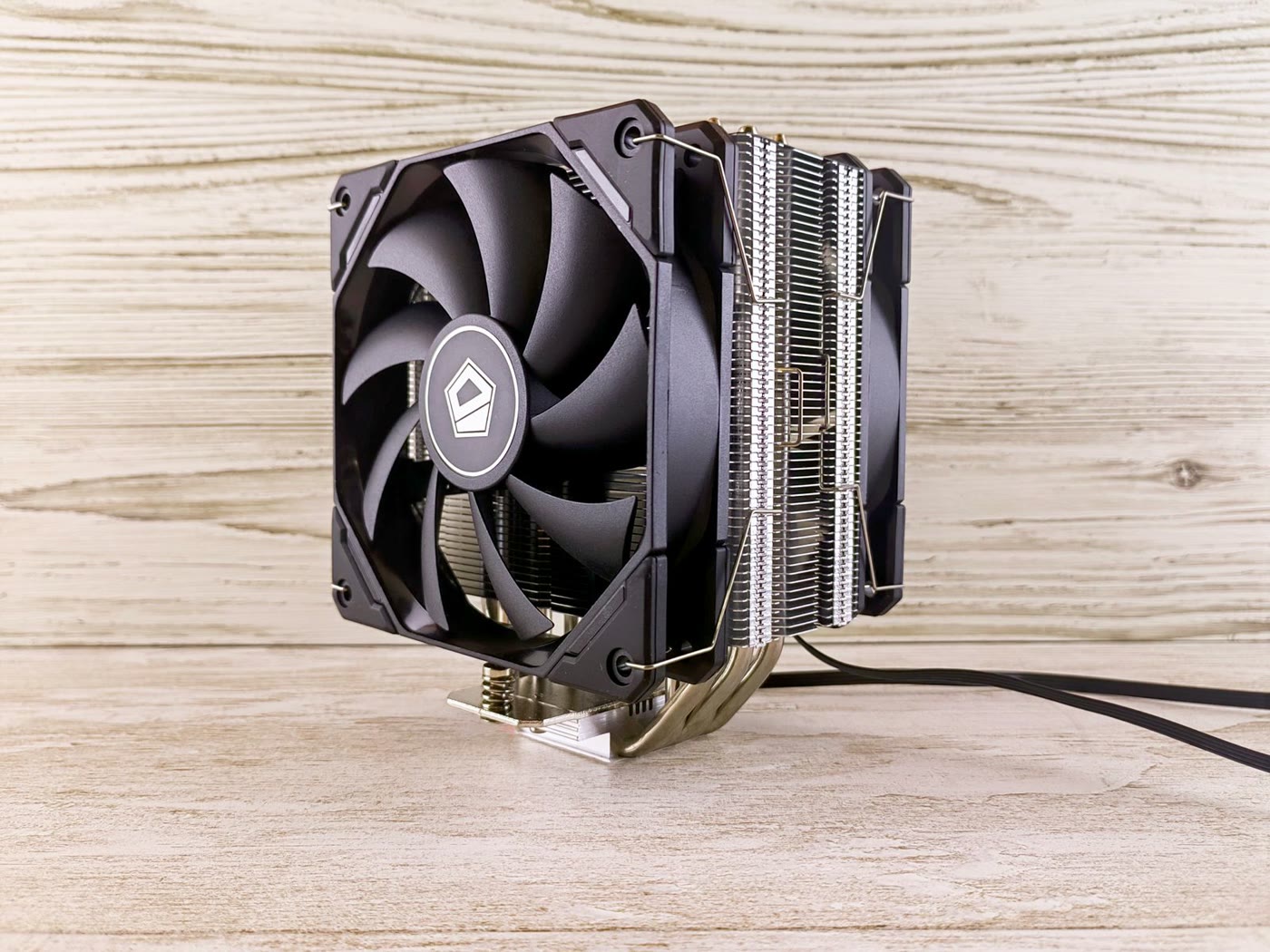
a decent tower cooler. gamersnexus’s budget air pick handles a 65 watt part for under $16, and mid-range towers in the $30 to $70 range cover everything else at this level comfortably.
liquid here buys you looks and a tidier area around the socket, not lower temperatures you’ll notice. if your current chip runs hot at this level, start with what you can do without buying anything.
a mid-range gaming cpu around 150 watts
either works. seven degrees at equal noise is the measured gap, and the decision comes down to what else you care about: case clearance, ram height, whether you want a screen, whether a pump in the loop bothers you.
if you want the simplest answer, a good air cooler is cheaper, quieter to service and has less to go wrong. if you want the coolest chip, liquid wins.
a high core count cpu under sustained load
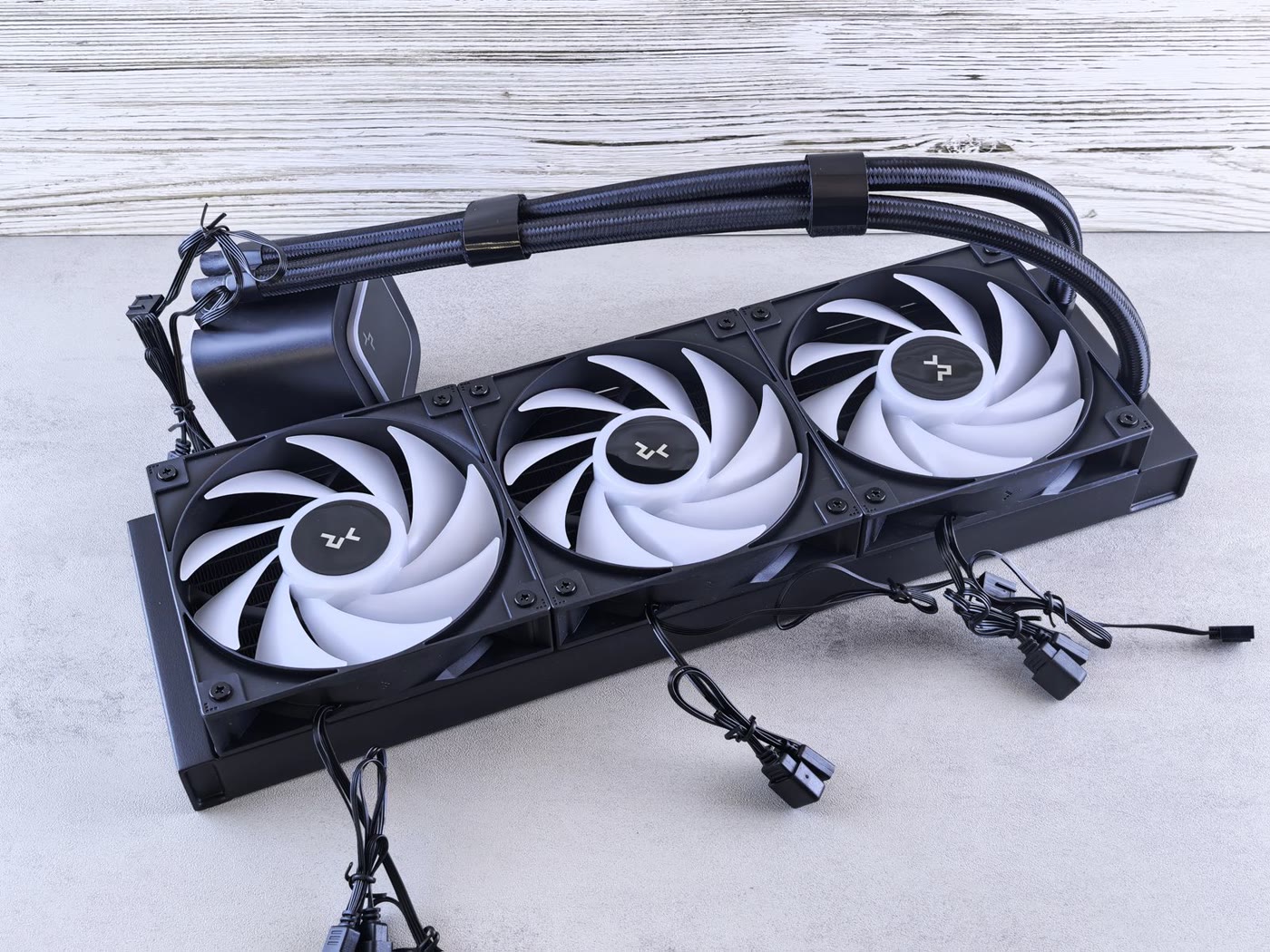
liquid, and a 360mm radiator. gamersnexus’s 276 watt testing is unambiguous on this: one air cooler in their entire suite finished the run, and it did so at around 90 degrees.
if you render, encode or compile for hours, this is your row of the table.
small cases and tall memory
check clearance before anything else. a large tower cooler can collide with memory heatspreaders or block the top pcie slot, and that’s a hard constraint rather than a preference. this is the original reason liquid cooling exists as a category.
the recommendation in one table
| cpu heat load | what the testing shows | recommendation | example | price |
|---|---|---|---|---|
| 65–120 w | a single-tower cooler handles it | air | thermalright assassin spirit v2 | ~$16 |
| ~150 w | best air sits ~7 °c behind best liquid at equal noise | either, your call | sudokoo sk700 (air) / id-cooling fx 360 pro (liquid) | $60–70 / $52 |
| 250 w+ sustained | only one air cooler finished gn’s 276 w run, at ~90 °c | liquid strongly advised, 360 mm | arctic liquid freezer iii pro / tryx panorama 360 | ~$125 / $250–300 |
one clarification on the bottom row. air isn’t impossible at that load, but gamersnexus’s testing found exactly one cooler in their suite that could complete the run without throttling, and it did so at a temperature they called borderline. that’s a much narrower margin than most people plan around.
the short version
below roughly 150 watts, pick whichever suits your case and your taste, because the measured difference is modest.
above 250 watts sustained, the testing stops being a comparison. one air cooler in gamersnexus’s current suite could complete their 276 watt run at all.
and if you’re buying air at $150 because it’s supposed to be the cheaper option, check the price of a 360mm radiator first. that rule stopped being true.